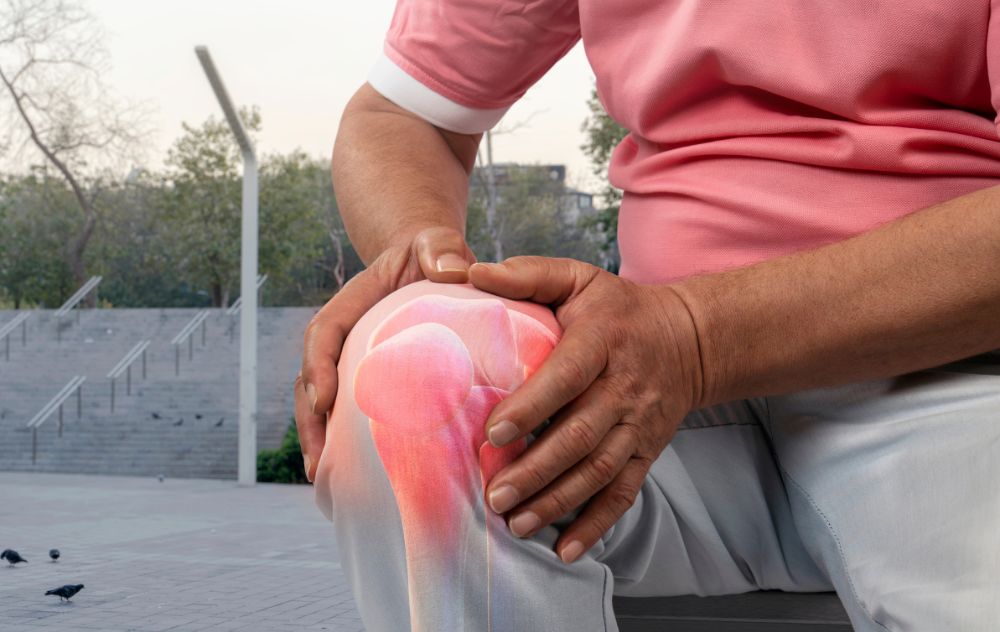
Knee stiffness can be related to osteoarthritis, especially when it happens regularly, feels worse after resting, or comes with pain, swelling, or reduced movement. Osteoarthritis is a common cause of chronic knee symptoms because it can affect the cartilage and tissues inside the joint, making the knee feel tight, sore, and harder to move.
Not every stiff knee means osteoarthritis, but persistent stiffness should not be ignored. If symptoms are interfering with walking, exercise, or daily activities, it may be time to have your knee evaluated.
What Does Knee Stiffness Feel Like?
Knee stiffness is more than occasional soreness. Many people describe it as:
- difficulty bending or straightening the knee
- tightness after sitting for a long time
- trouble getting moving in the morning
- discomfort when standing up, walking, or climbing stairs
- a knee that feels swollen, heavy, or less flexible than usual
Some people notice stiffness before pain becomes severe. Others have both stiffness and ongoing aches that worsen over time.
How Is Knee Stiffness Related to Osteoarthritis?
Osteoarthritis is a degenerative joint condition that can affect the knee over time. As the joint changes, movement may become less smooth and more uncomfortable. This can lead to stiffness, especially after inactivity or first thing in the morning.
Knee osteoarthritis may also cause:
- chronic knee pain
- swelling
- reduced range of motion
- knee grinding or clicking
- discomfort with walking or standing
- symptoms that get worse with activity
For many patients, stiffness is one of the first signs that something in the joint is changing.
For more on symptoms and causes, visit our knee osteoarthritis page.
Why Osteoarthritis Can Make the Knee Feel Stiff
A healthy knee joint moves smoothly. When osteoarthritis develops, the tissues in and around the knee may become irritated, inflamed, or damaged. That can affect how the joint functions and make motion feel more restricted. Some patients also describe the joint as feeling stiff or “dry,” and understanding why knees can feel stiff and dry can help explain what may be contributing to that sensation.
Stiffness may be more noticeable when:
- you wake up in the morning
- you stand after sitting for a long period
- you have been less active than usual
- your knee is swollen
- pain causes you to limit movement
In some cases, stiffness can gradually progress along with other symptoms of chronic knee pain.
Other Causes of Knee Stiffness
Although osteoarthritis is a common cause, it is not the only reason a knee may feel stiff. Other possible causes include:
- overuse injuries
- tendon or ligament strain
- prior knee injury
- inflammation
- bursitis
- meniscus problems
- recovery after activity or exercise
That is one reason a proper evaluation matters. A stiff knee should be looked at in the context of your full symptoms, activity level, and medical history.
When Knee Stiffness May Be a Sign You Should Seek Treatment
Occasional stiffness after exercise may not be serious. But ongoing symptoms deserve attention, especially if you notice:
- stiffness that keeps coming back
- pain with walking or daily movement
- swelling that does not improve
- trouble bending or straightening the knee
- symptoms that are getting worse over time
- reduced ability to stay active
If knee stiffness is affecting your quality of life, a specialist can help determine whether osteoarthritis or another issue may be involved.
You can also learn more about chronic knee pain treatment options.
How Knee Osteoarthritis Is Evaluated
A knee evaluation usually starts with a review of your symptoms, medical history, and how the pain or stiffness affects daily life. Your provider may assess your movement, ask when symptoms occur, and look for signs of inflammation or joint limitation.
The goal is to understand what may be causing the stiffness and whether a treatment plan is appropriate.
Treatment Options for Knee Stiffness Related to Osteoarthritis
Treatment depends on the cause and severity of symptoms. For patients with osteoarthritis-related knee pain, options may include conservative care, activity modification, and in some cases minimally invasive treatment.
At USA Pain Center, patients may learn whether they are candidates for Genicular Artery Embolization (GAE), a minimally invasive outpatient procedure used for certain patients with chronic knee pain related to osteoarthritis.
GAE is not the right option for everyone, but it may be worth discussing if knee pain and stiffness continue despite other efforts.
You can also read more about:
Can Knee Stiffness Improve Without Surgery?
In some cases, knee stiffness can improve with the right treatment plan, depending on the underlying cause. That does not always mean the joint returns to normal, but symptom relief and better function may be possible.
The most important step is identifying why the stiffness is happening in the first place. If osteoarthritis is contributing to your symptoms, early evaluation may help you understand your options before the condition affects mobility even more.
When to Talk to a Specialist About a Stiff Knee
It may be time to talk to a specialist if:
- your knee feels stiff most days
- pain is limiting activity
- walking has become more difficult
- symptoms are interfering with work, exercise, or sleep
- you want to explore non-surgical treatment options
A consultation can help determine whether your symptoms may be related to knee osteoarthritis and what next steps make sense for your situation.
To get started, schedule a visit with USA Pain Center or request a knee pain consultation.
Take the Next Step for Knee Stiffness
So, is knee stiffness related to osteoarthritis? It can be. In many patients, stiffness is one of the most noticeable symptoms of knee osteoarthritis, especially when it happens alongside pain, swelling, or reduced movement.
Because not every stiff knee has the same cause, it is important to get persistent symptoms evaluated. Understanding the reason behind knee stiffness is the first step toward finding the right treatment approach.