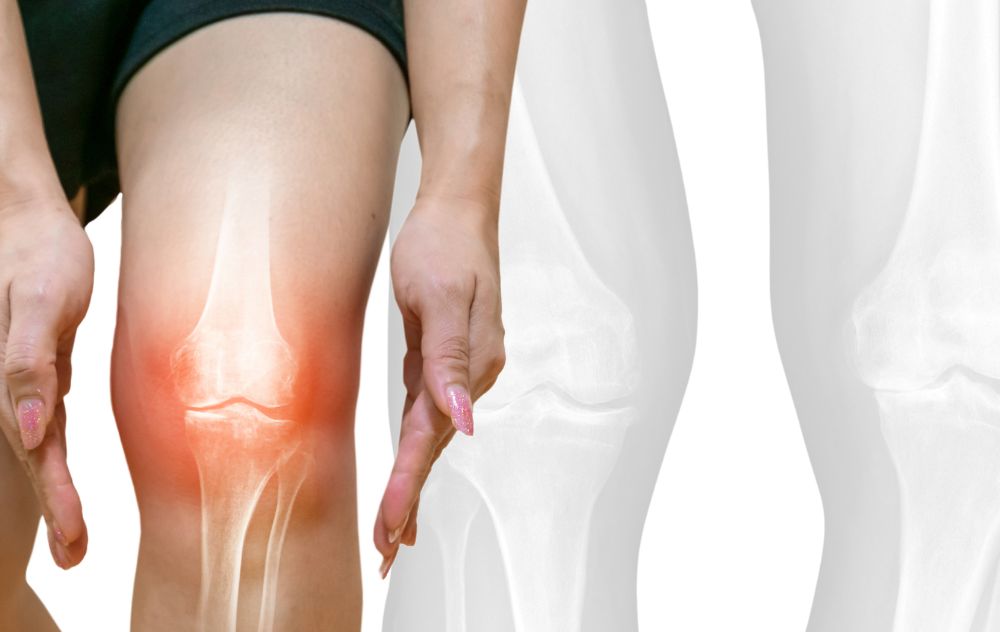
Medically reviewed by
USA Pain Center Medical Review Team
Interventional radiologists focused on knee arthritis
Reviewed: September 2026
Bone-on-bone knee arthritis is classified as Stage 4 osteoarthritis on the Kellgren-Lawrence grading scale – the most advanced stage of cartilage loss in the knee joint. At this stage, the cartilage that normally cushions the knee has worn down significantly or nearly completely, allowing the femur and tibia to move against each other with little remaining buffer. For patients who receive this description from a physician or on an imaging report, understanding what it means – and what options exist – is a reasonable and important first step.
The term “bone-on-bone” describes a physical finding on imaging rather than a fixed treatment pathway. Many people at this stage experience significant pain, stiffness, and difficulty with daily activity, but the degree of symptoms varies considerably from person to person. Research has also clarified that joint inflammation – not cartilage loss alone – contributes substantially to pain at Stage 4, which has implications for which treatments may help.
This overview covers how the Kellgren-Lawrence staging system works, what bone-on-bone arthritis actually feels like, how activity and walking fit into the picture, and what treatment options – including minimally invasive approaches – exist at this stage of the condition.
What Does Bone-on-Bone Mean for Your Knee?
Cartilage is the smooth, flexible tissue that covers the ends of bones where they meet in a joint. In a healthy knee, cartilage acts as a shock absorber and allows the joint to move with low friction. As knee osteoarthritis progresses, this cartilage gradually thins, frays, and eventually wears away in affected areas.
When physicians or patients use the term “bone-on-bone,” they are describing the point at which cartilage loss is severe enough that the bones in the joint move against each other with little or no remaining cushion. On X-rays, this appears as a narrowed or nearly absent joint space – the gap between the femur and tibia that reflects how much cartilage remains. Bone spurs, small bony overgrowths that can form along joint edges in response to ongoing wear, are also commonly visible at this stage.
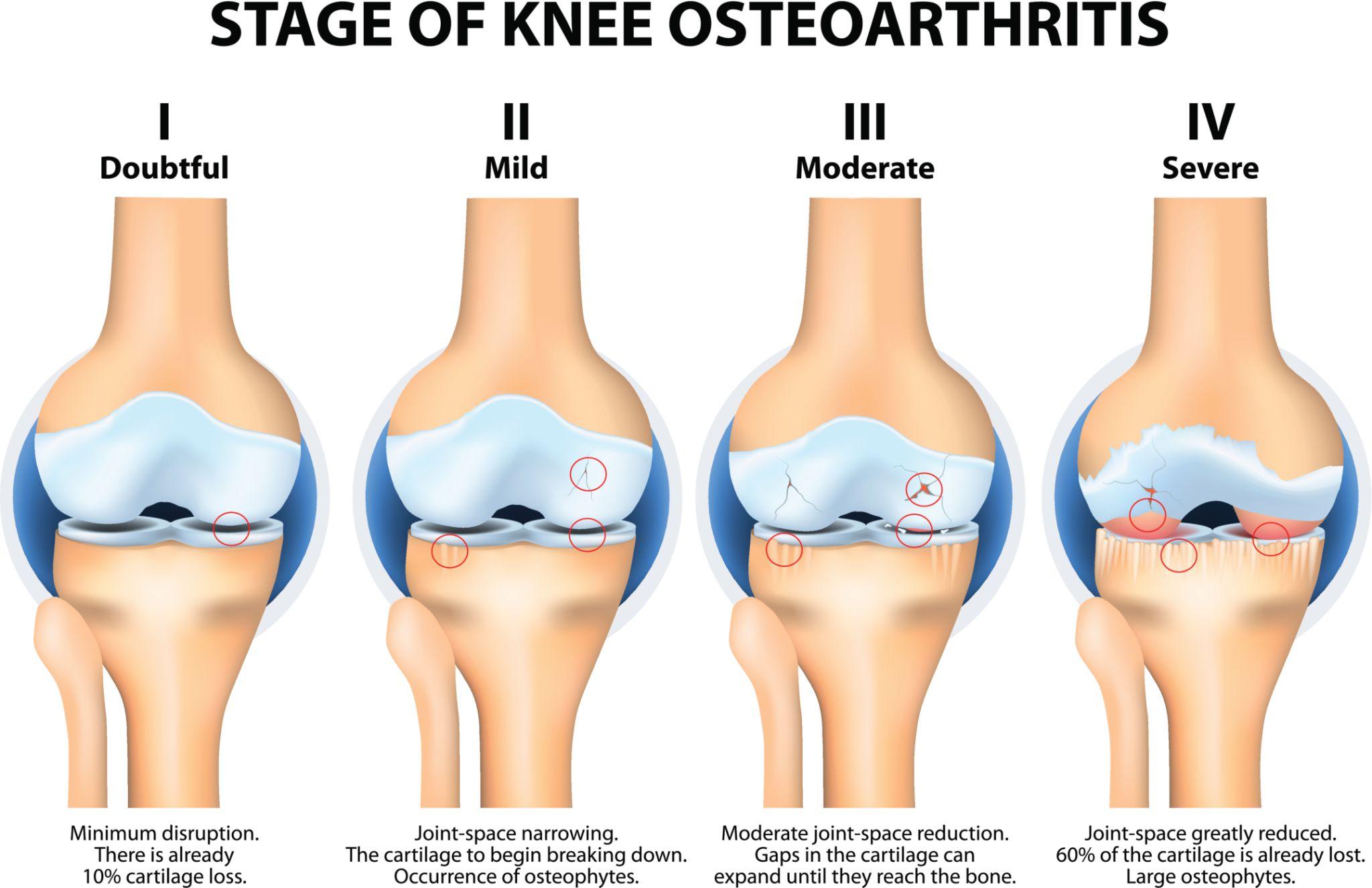
This structural finding corresponds to Stage 4 on the Kellgren-Lawrence grading scale, the most widely used system for classifying knee osteoarthritis severity on imaging.
The Kellgren-Lawrence Stages of Knee Arthritis
The Kellgren-Lawrence scale assigns a grade between 0 and 4 based on X-ray findings. Our overview of the four stages of knee osteoarthritis covers this progression in detail, but a summary of each stage helps place bone-on-bone arthritis in context.
Stage 1 – Minor Changes, Few Symptoms
Stage 1 reflects minimal changes to the joint on imaging. Cartilage may show early wear, and very small bone spurs may be visible, but the joint space is generally intact. Most people at Stage 1 experience little to no pain and may not be aware that any change has occurred.
Stage 2 – Mild Arthritis Begins
At Stage 2, cartilage begins to show more noticeable damage on imaging. The joint space remains, but mild narrowing may be visible. Patients at this stage often begin to experience intermittent stiffness or discomfort, particularly after activity or extended periods of rest.
Stage 3 – Moderate Cartilage Loss
Stage 3 reflects significant cartilage loss. Joint space narrowing is more pronounced on imaging, and bone spurs are more clearly visible. Symptoms at this stage – including pain during activity, stiffness, and occasional swelling – tend to be more frequent and may begin to affect daily function.
Stage 4 – Advanced Osteoarthritis and Bone-on-Bone Contact
Stage 4 is the most advanced classification on the Kellgren-Lawrence scale. Cartilage loss is severe, the joint space is markedly narrowed or absent in affected areas, and bone spurs are pronounced. This is the stage described as “bone-on-bone.” Pain at Stage 4 tends to be more persistent and may be present even at rest. Swelling, stiffness, joint instability, and reduced range of motion are all common. Daily activities such as walking, climbing stairs, or rising from a chair can become noticeably more difficult.
What Bone-on-Bone Arthritis Feels Like
The experience of bone-on-bone knee arthritis varies between individuals, but certain patterns appear consistently. Pain at this stage tends to be more constant than in earlier stages, where discomfort is often limited to activity. Some people describe a deep aching or grinding sensation within the joint, while others report sharp pain with specific movements such as bending, kneeling, or descending stairs.[1]
Stiffness is a frequent companion to Stage 4 pain. Many patients notice the joint feels tighter after extended inactivity – upon waking in the morning or after sitting for an extended period – and requires several minutes of movement before loosening somewhat. Swelling that comes and goes, particularly after activity, reflects ongoing joint inflammation.
Some patients with imaging-confirmed bone-on-bone arthritis experience relatively mild day-to-day symptoms, while others with similar imaging findings experience significant limitations. This variability underscores an important clinical point: the degree of cartilage loss visible on an X-ray does not always predict the intensity of a patient’s pain experience. Learning about early signs of knee arthritis can help patients recognize how symptoms often progress over time.
Why Inflammation Drives Much of the Pain at Stage 4

A common assumption about bone-on-bone arthritis is that pain comes entirely from bones rubbing against each other. Research has clarified that this picture is incomplete. Synovial inflammation – irritation and swelling of the joint lining – plays a substantial role in the pain experience at Stage 4. As cartilage wears away, the joint environment becomes increasingly irritated, and the body responds by sending more blood flow to the area and generating new, abnormal blood vessels around the joint. This process, called neovascularization, is associated with ongoing pain and inflammation.[2]
This inflammation mechanism is clinically significant because it means that treatment approaches targeting inflammation – rather than only the structural loss of cartilage – can potentially provide meaningful pain relief even when bone-on-bone contact is present. Genicular artery embolization (GAE) is one such approach. GAE works by reducing blood flow through the abnormal new vessels that contribute to joint inflammation, which may reduce knee pain in appropriate candidates. Whether GAE is a reasonable option for a given patient depends on a specialist evaluation of the individual’s full clinical picture.
Does Walking Help Bone-on-Bone Knee Arthritis?
Walking is a reasonable question at this stage of osteoarthritis, and the research offers a nuanced answer. Complete inactivity is generally not recommended, as avoiding movement allows the muscles that support the knee joint to weaken over time. Weaker surrounding muscles can increase the load placed directly on the joint and may worsen symptoms.
A large cohort study from the Osteoarthritis Initiative found that adults with knee osteoarthritis who walked for exercise were less likely to develop new frequent knee pain compared to those who did not walk, and were also less likely to experience progression of joint space narrowing.[3] These findings support the recommendation that walking, when approached appropriately, may benefit patients across the stages of the condition.
For patients at Stage 4, the approach to walking requires attention to pacing and surface. Low-impact walking on level ground, for moderate distances, and at a comfortable pace tends to support joint health without placing excessive stress on an already compromised joint. High-impact activity – such as running or activities that involve sudden stops and direction changes – is generally not appropriate at this stage. A physical therapist can help identify the right level and type of movement for your specific condition.
What Can Be Done for Bone-on-Bone Arthritis?
Stage 4 osteoarthritis does not reduce the range of treatment approaches to a single option. Multiple pathways exist, from conservative management strategies to minimally invasive interventional procedures. The right approach depends on factors including symptom severity, overall health, prior treatments, and what the patient is hoping to achieve.
Conservative and Supportive Options
Conservative management is often an appropriate starting point or ongoing component of care, even at Stage 4. These approaches do not reverse cartilage loss but can meaningfully reduce pain and support function:
- Physical therapy: Strengthening the quadriceps, hamstrings, and hip muscles reduces the load placed on the knee during movement. A structured program supervised by a physical therapist is generally more effective than self-guided exercise.
- Activity modification: Adjusting which activities you do and how you do them can reduce painful loading of the joint. Substituting low-impact for high-impact activities and breaking longer sessions into shorter intervals can help maintain mobility with less discomfort.
- Weight management: Each pound of body weight places several pounds of force on the knee during walking. Even modest weight reduction can reduce joint stress and improve symptoms for patients who carry excess weight.
- Assistive devices: Knee braces and walking aids can reduce stress on the joint and improve stability during daily activity.
- Anti-inflammatory medications: Over-the-counter NSAIDs can help manage pain and inflammation on a short-term basis. Long-term use carries potential risks and should be discussed with a physician.
When conservative approaches no longer provide adequate relief, or when symptoms are already significant enough to limit daily function substantially, additional options may be considered.
Minimally Invasive Options: Genicular Artery Embolization (GAE)
Genicular artery embolization (GAE) is a minimally invasive, outpatient procedure performed by interventional radiologists. The procedure targets the abnormal blood vessels that contribute to synovial inflammation in the knee joint. Using image guidance, a specialist places tiny embolic particles into these vessels to reduce their blood flow, which may decrease joint inflammation and associated pain.[4]
Research has documented sustained symptom improvement following GAE in patients with moderate-to-severe knee osteoarthritis. A 24-month prospective trial published in the Journal of Vascular and Interventional Radiology found that nearly half of patients with Kellgren-Lawrence Grade 2-4 knee osteoarthritis experienced a significant reduction in symptoms at two years following GAE. A 2026 systematic review and meta-analysis in Skeletal Radiology, drawing on 18 studies, also found significant and sustained pain reduction. Adverse events reported in trials are generally uncommon and self-limited.[5]
GAE is generally considered most appropriate for patients whose pain has not responded adequately to conservative care. For patients at Stage 4, candidacy is evaluated individually – a specialist assessment is needed to determine whether the inflammation pattern and overall clinical picture make GAE a reasonable option. Not every patient with bone-on-bone findings will be a candidate, and a thorough evaluation is the appropriate starting point. Our article on whether you can avoid knee replacement if you are bone-on-bone covers the broader decision-making landscape in more detail.
Knee Pain Evaluation
Understanding Your Knee Pain Is the First Step
Bone-on-bone arthritis describes a structural finding on imaging – it is not a verdict about what treatment is or is not available to you. A specialist evaluation looks at your full clinical picture, not only your imaging results, to identify which approaches may be appropriate for your level of symptoms, activity goals, and overall health.
The USA Pain Center team specializes in image-guided, minimally invasive care for knee pain from osteoarthritis. A conversation with a specialist is the most direct way to understand what your stage of arthritis means for your specific options.
FAQs About Bone-on-Bone Knee Arthritis
- Cleveland Clinic. “Osteoarthritis of the Knee – Symptoms and Causes.” my.clevelandclinic.org/health/diseases/21750-osteoarthritis-knee
- Sriram T. “Genicular Arterial Embolization in Knee Osteoarthritis: Current Evidence, Clinical Outcomes, and Future Perspectives.” Journal of Arthroscopic Surgery and Sports Medicine. 2026;7:148-54.
- Lo GH, et al. “Association Between Walking for Exercise and Symptomatic and Structural Progression in Individuals with Knee Osteoarthritis: Data from the Osteoarthritis Initiative Cohort.” Arthritis Rheumatology. 2022. PubMed Central PMC9529782.
- Ahmed O, et al. “Genicular Artery Embolization for Symptomatic Knee Osteoarthritis: A Comprehensive Review of Techniques and Clinical Outcomes.” Cardiovascular and Interventional Radiology. 2025;48:1737-1754.
- Badar W, et al. “One- and Two-Year Outcomes of Genicular Artery Embolization for Symptomatic Knee Osteoarthritis.” Cardiovascular and Interventional Radiology. 2025;48(12):1705-1713.
Medical disclaimer: This article is for informational purposes only and should not be considered as medical advice. Always consult with a qualified healthcare provider for diagnosis, treatment recommendations, and personalized medical guidance.