Medically reviewed by
USA Pain Center Medical Review Team
Interventional radiologists focused on knee arthritis
Date: October 2026
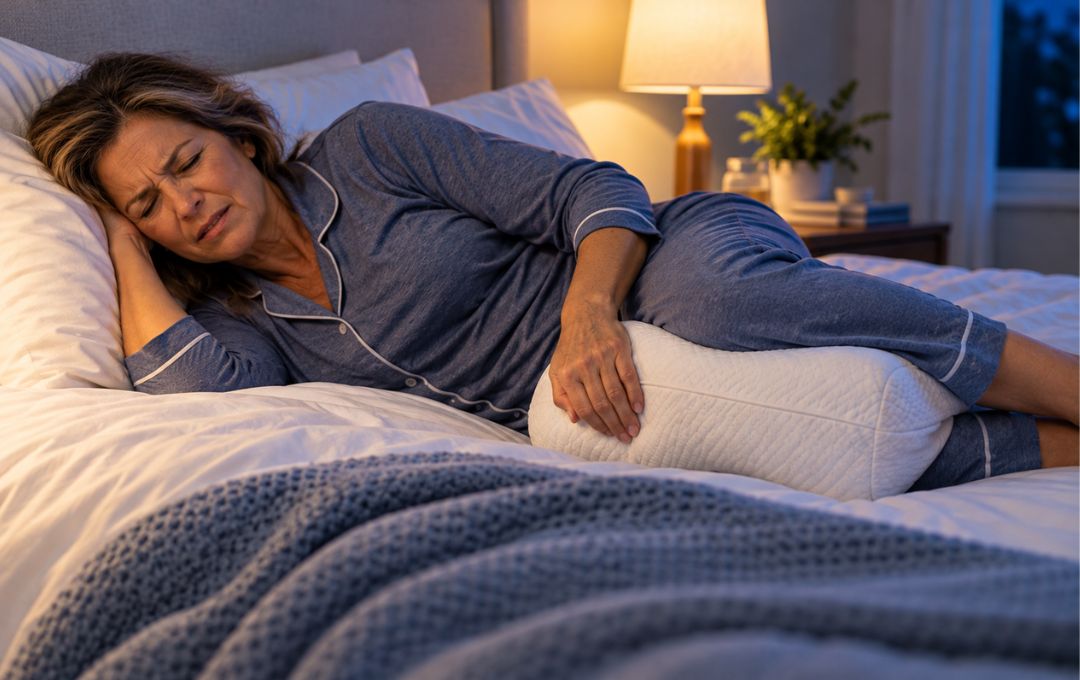
Knee pain at night is one of the most disruptive signs of knee osteoarthritis, and there are real biological reasons it often feels more intense at rest than during the day. The same joint that allows you to climb stairs and go about your day can become noticeably more painful the moment you settle into bed, making it harder to fall asleep and waking you well before morning.
Three biological changes converge at night: synovial fluid circulation slows, cortisol levels drop, and pain signals face less competition from daytime activity. This guide covers why each of those shifts happens, which sleeping positions can ease the pressure, when nighttime knee pain signals a need for evaluation, and what treatment options may help when conservative approaches stop being enough.
Key Takeaway
Nighttime knee pain has biological causes that go beyond sleeping position. If positional changes and at-home remedies are no longer providing enough relief, a specialist evaluation can clarify what is driving your pain and whether a more targeted approach may be appropriate. Explore Treatment Options.
Why Knee Pain Tends to Worsen at Night
Three biological shifts combine to make knee pain more intense after a long day.
Synovial Fluid Thickens When You Stop Moving
During the day, movement keeps the synovial fluid inside your knee joint thin and circulating. This fluid acts as a lubricant and helps flush waste products away from the joint.[1] When you stop moving at night, that circulation slows, the fluid thickens, and the joint can feel stiff and achy when you shift positions in bed.
Cortisol Levels Dip at Midnight
Your body produces cortisol, a natural anti-inflammatory hormone, throughout the day. Levels drop to their lowest point around midnight.[2] As that buffer fades, inflammatory pressure inside the knee can rise, which is one reason pain often peaks in the middle of the night rather than at bedtime.
Reduced Distraction Amplifies Pain Signals
During the day, your brain processes dozens of competing signals. At night, with fewer distractions, pain signals from the knee receive more of your attention. The pain itself has not necessarily increased, but your awareness of it has, which can make symptoms feel more severe than they did earlier in the day.
Common Causes of Knee Pain at Night
Knee Osteoarthritis
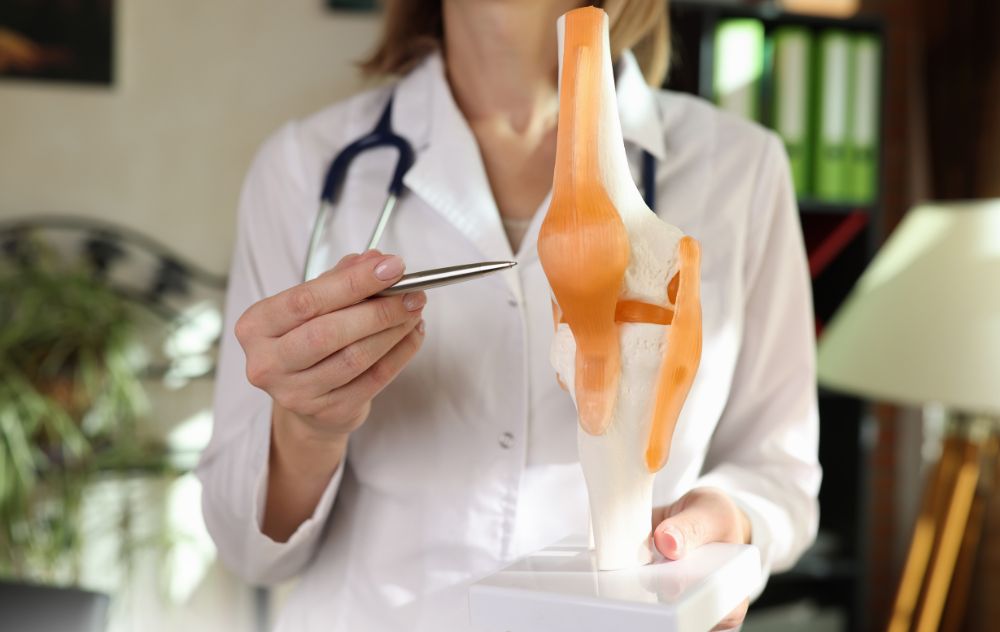
Knee osteoarthritis is one of the most common reasons people experience knee pain that worsens at rest. As cartilage wears down, the bones in the joint move with less cushion, and chronic inflammation keeps the area sensitive even when you are not using the knee actively. Over time, persistent inflammation can lead to hypervascularity – the growth of abnormal new blood vessels and nerve endings inside the joint – which increases sensitivity and can contribute to that deep, throbbing ache that is hardest to ignore at night.[3] Understanding the full range of knee osteoarthritis symptoms can help you determine whether your pain fits this pattern.
Bursitis and Tendonitis
Inflamed bursae (small fluid-filled sacs around the knee) and irritated tendons can also cause knee pain that builds throughout the day and feels worse after a period of rest. These conditions are typically associated with repetitive activity or acute overuse rather than long-term joint degeneration.
Other Causes Worth Noting
Less common causes include gout, which tends to produce sudden, intense pain that often starts at night, and referred pain from hip or lower back problems. If knee pain at night is new or significantly worsening, it is worth discussing with a healthcare provider to rule out other underlying causes. Recognizing the early signs of knee arthritis can help distinguish typical osteoarthritis patterns from other conditions.
Best Sleeping Positions for Knee Pain
Small adjustments to how you sleep can meaningfully reduce the pressure on your knee joint throughout the night.
Side Sleeping with a Pillow Between the Knees
Placing a firm pillow between your knees while sleeping on your side keeps the legs aligned and reduces the compressive force on the affected knee. This is generally considered the most effective position for reducing knee pain during sleep.
Back Sleeping with Knee Support
Sleeping on your back with a pillow or rolled towel placed under your knees maintains a slight, natural bend in the joint. This can reduce pressure on the joint surfaces and help prevent the stiffness that builds overnight.
Positions to Avoid
Sleeping on your stomach or crossing your legs puts additional rotational stress on the knee joint. These positions can increase joint strain and leave the joint stiffer in the morning.
Red Flag Symptoms That Need Attention
Not all knee pain at night is something to wait out. The following patterns are worth discussing with a healthcare provider:
- Pain that consistently wakes you from sleep
- Swelling or warmth in the joint
- Pain that has been gradually worsening over several weeks
- Stiffness that takes more than 30 minutes to ease in the morning
- Any new or sudden change in how the pain feels
These patterns can indicate that conservative management at home is no longer keeping pace with underlying joint changes. A specialist evaluation can assess what is happening in the joint and whether your current approach still fits your level of symptoms. At-home strategies for how to reduce knee pain can be useful day to day, but persistent nighttime pain often warrants a closer look.
What You Can Do About Persistent Knee Pain at Night
For people whose knee pain at night relates to osteoarthritis, addressing the underlying inflammation may offer more relief than positional changes alone. Genicular artery embolization (GAE) is a minimally invasive, image-guided procedure that targets the excess blood flow associated with knee joint inflammation. For appropriate candidates, it may help reduce the hypervascularity that contributes to nighttime pain sensitivity.
A specialist evaluation is the first step toward understanding whether conservative care is still working or whether a more targeted approach may be worth discussing. Not every patient is a candidate, and a thorough assessment is always conducted before any treatment recommendation is made.
Knee Pain Evaluation
Understanding Your Knee Pain Is the First Step Toward Relief.
Nighttime knee pain can be a sign that your current approach is not fully addressing the inflammation driving your discomfort. USA Pain Center specialists are experienced in diagnosing knee conditions and discussing minimally invasive options for patients with symptomatic osteoarthritis.
USA Pain Center uses advanced imaging and minimally invasive techniques to assess the source of knee pain. If you are a candidate for treatment, your specialist will walk through options with you in detail.
FAQs About Knee Pain at Night
- Felson DT, et al. Osteoarthritis. New England Journal of Medicine. 2006;354:841-848.
- Buttgereit F, et al. Circadian rhythms of glucocorticoid release and the risk of inflammatory disease. Annals of the Rheumatic Diseases. 2015;74(11):1951-1957.
- Parmelee PA, et al. Sleep disturbance in osteoarthritis: linkages with pain, disability, and depressive symptoms. Arthritis Care and Research. 2015;67(8):1131-1141.
Medical disclaimer: USA Pain Center content provides medical education only. It is not a diagnosis or treatment recommendation. Consult a pain management specialist for evaluation.