Medically reviewed by
USA Pain Center Medical Review Team
Reviewed November 2026
Knee hemarthrosis means blood has leaked into the knee joint. It causes fast swelling, tightness, and pain. This is different from the fluid buildup common with knee osteoarthritis, though the two can overlap. Most cases follow a clear injury, like a torn ligament or a fracture. But blood can also collect in the knee without any obvious injury. This happens most often in people who take blood thinners, have a bleeding disorder, or live with advanced knee osteoarthritis. The difference matters. Blood irritates the joint lining more than typical joint fluid does. It also tends to show up faster. Depending on the cause, it can be a sign of a problem that needs quick care rather than a few days of rest. If you already manage chronic knee pain from osteoarthritis, a sudden change in how your knee swells or bruises can raise real questions. Does this mean your condition is getting worse? Knowing what sets hemarthrosis apart from a normal arthritis flare can help you describe your symptoms clearly at your next visit. It can also help you know when same-day care, not a wait-and-see approach, is the safer choice.
Common Causes of Knee Hemarthrosis
Blood most often enters the knee after an injury. A torn anterior cruciate ligament, a fracture that reaches the joint surface, or a dislocated kneecap can each tear small blood vessels inside the joint. This leads to fast swelling within hours. But injury is not the only cause. People on blood-thinning medication, those with an inherited bleeding disorder like hemophilia, and patients with certain vascular conditions can have joint bleeding with no injury at all. Knowing which cause applies to you helps guide the next step.
Injury and Ligament Damage
Ligament tears, especially of the ACL, cause a large share of traumatic knee hemarthrosis cases. Fractures that reach into the joint and sudden kneecap dislocations act in a similar way. Swelling after this kind of injury usually shows up within two to four hours.[1] It often comes with sharp pain and a knee that feels like it cannot hold your weight.
Bleeding Disorders and Blood-Thinning Medications
Blood thinners and inherited clotting problems can let blood collect in the joint with little or no injury.[1] These cases often build up more slowly. They can also return in the same knee over time. This is why your provider will likely ask about your medications and any family history of bleeding problems.
Advanced Knee OA
Less often, joint bleeding happens in people with long-standing knee osteoarthritis. As cartilage wears down, the joint lining can grow fragile, abnormal blood vessels in response to ongoing inflammation.[2] These vessels bleed more easily than healthy tissue. This OA-related cause works differently than a single injury. It tends to show up as a repeating pattern rather than a one-time event.
How Knee Hemarthrosis Relates to Osteoarthritis
Osteoarthritis does not directly cause hemarthrosis in most people. But the two conditions share an important link in more advanced cases. As knee osteoarthritis gets worse, the joint lining can grow new, oversensitive blood vessels in response to constant irritation. This process is tied to the ongoing joint inflammation that drives much of osteoarthritis pain.[2] These fragile vessels bleed more easily than normal joint tissue. This may explain why some patients with significant knee osteoarthritis symptoms notice blood-tinged or fast-swelling joints with no clear injury. This does not mean every swollen knee in osteoarthritis involves bleeding. But it is a known pattern in more advanced cases.
Recognizing the Symptoms
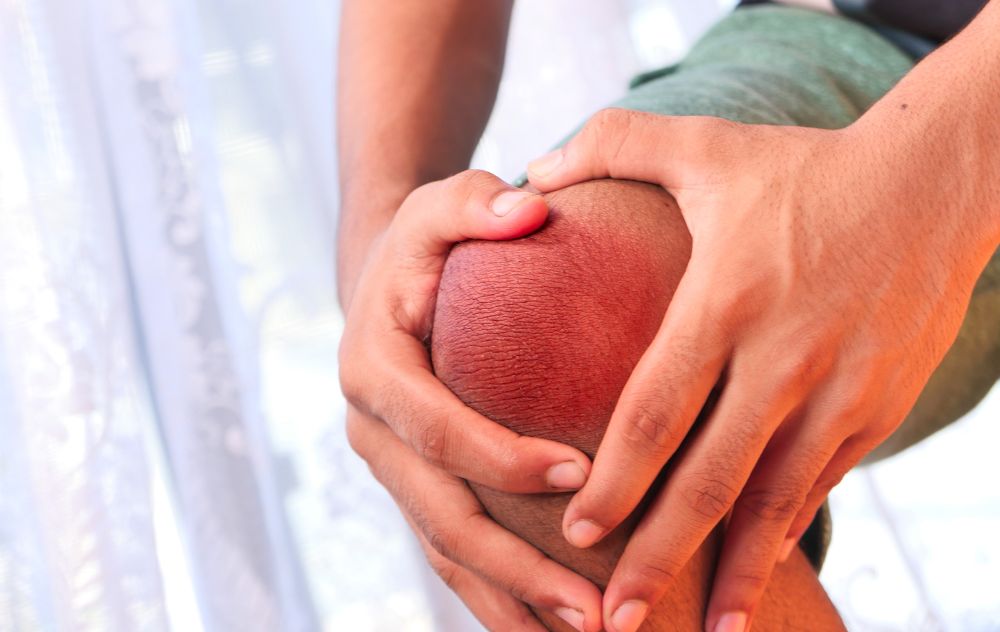
Hemarthrosis usually shows up fast. The knee swells noticeably, often within a few hours. It feels tight, warm, and tender to touch. Range of motion drops, and bending or straightening the knee feels uncomfortable. Some patients notice bruising or a dusky color around the joint. Pain is often sharper than the dull ache many people link to ordinary knee swelling from osteoarthritis. A knee that suddenly feels unstable, locks up, or cannot bear weight needs prompt attention, not a wait-and-see approach.
When to Seek Immediate Care
Fast knee swelling after a fall, twist, or direct hit should be checked the same day. This is especially true if the knee feels unstable or you cannot put weight on it. Seek urgent care if swelling is severe, the skin over the joint feels hot or looks discolored, you have a fever, or you take blood thinners.[1] These signs can point to a serious internal injury, an infection, or a bleeding problem that needs quick care rather than home treatment alone.
How Knee Hemarthrosis Is Diagnosed and Evaluated
Diagnosis usually starts with a physical exam and a review of your injury history, medications, and any bleeding disorders. Your provider may order imaging, such as an X-ray or MRI, to look for fractures or ligament damage. In some cases, a joint aspiration removes fluid from the knee to confirm blood is present and rule out infection.[1] If your evaluation points to advanced osteoarthritis as a factor, rather than injury or a bleeding disorder, your provider may discuss whether genicular artery embolization (GAE) fits your case. GAE is not a treatment for an active bleeding episode. It is an outpatient procedure approved for chronic knee pain linked to osteoarthritis, and a specialist evaluation is required to confirm candidacy, since not every patient with knee symptoms qualifies.
Knee Swelling Evaluation
Not Sure What’s Behind Your Knee Swelling?
Knee hemarthrosis, osteoarthritis, and other joint conditions can all cause swelling, and it is not always possible to tell them apart without a professional evaluation. USA Pain Center specialists use advanced imaging to identify what is actually happening inside your knee.
If chronic knee pain from osteoarthritis is part of the picture, our team can walk you through minimally invasive options and whether you may be a candidate after a full evaluation.
FAQs About Knee Hemarthrosis and Osteoarthritis
- Cleveland Clinic. Hemarthrosis (Joint Bleeding). Cleveland Clinic Health Library. https://my.clevelandclinic.org/health/diseases/24225-hemarthrosis-joint-bleeding
- Bone and Spine. Hemarthrosis: Causes, Diagnosis, and Management. https://boneandspine.com/hemarthrosis/
- National Institute of Arthritis and Musculoskeletal and Skin Diseases. Osteoarthritis. National Institutes of Health.
Medical disclaimer: USA Pain Center content provides medical education only. It is not a diagnosis or treatment recommendation. Consult a pain management specialist for evaluation.