Medically reviewed by
USA Pain Center Medical Team
Reviewed September 2026
If your knees are aching, stiff, or visibly swollen, it is easy to write off the discomfort as simple wear and tear. But painful joints are not always a byproduct of aging; sometimes, your own immune system is behind it. Both psoriatic arthritis (PsA) and knee osteoarthritis (OA) target the same joints, but they are driven by different underlying causes.
PsA stems from an autoimmune response, often linked to skin psoriasis, where the body’s defenses turn against its own healthy joint tissue. Osteoarthritis, by contrast, is driven by the gradual breakdown of protective joint cartilage over time. Because these two conditions can mimic each other’s symptoms, and can even overlap in the same knee, figuring out what is happening beneath the surface is the first step toward finding lasting relief.
What Is Psoriatic Arthritis, and Can It Affect the Knee?
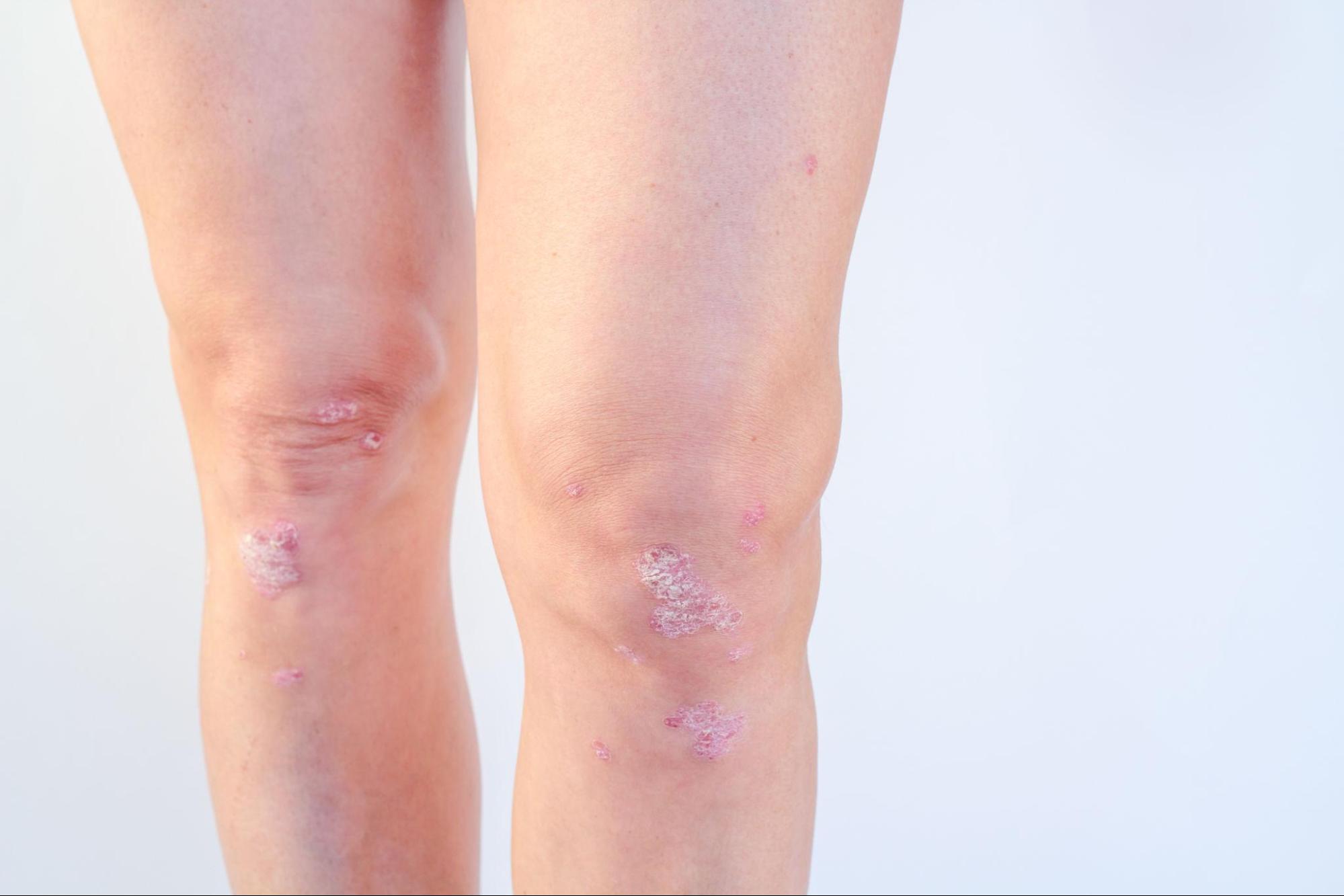
Psoriatic arthritis is a chronic autoimmune condition connected to psoriasis, a skin disease that causes red, scaly patches. In PsA, the immune system mistakenly attacks joint tissue, which can lead to swelling, stiffness, and pain in the knees and other joints. Unlike joint pain from everyday wear, PsA pain often comes with skin or nail changes and tends to flare up and settle down over time.
Psoriatic Arthritis vs. Knee Osteoarthritis: Key Differences
|
PsA vs. Osteoarthritis Guide |
||
|---|---|---|
| Characteristics | Psoriatic Arthritis (PsA) | Osteoarthritis |
| What Causes It | Autoimmune inflammation | Wear and tear |
| Swelling | Common | Mild to Moderate |
| Morning Stiffness | Often prolonged | Usually brief |
| Warmth | Common | Less common |
| Other Signs | Psoriasis, fatigue, nail changes | Joint grinding |
Both conditions can cause knee pain and stiffness, but they behave differently.
Inflammatory Pain vs. Wear-and-Tear Pain
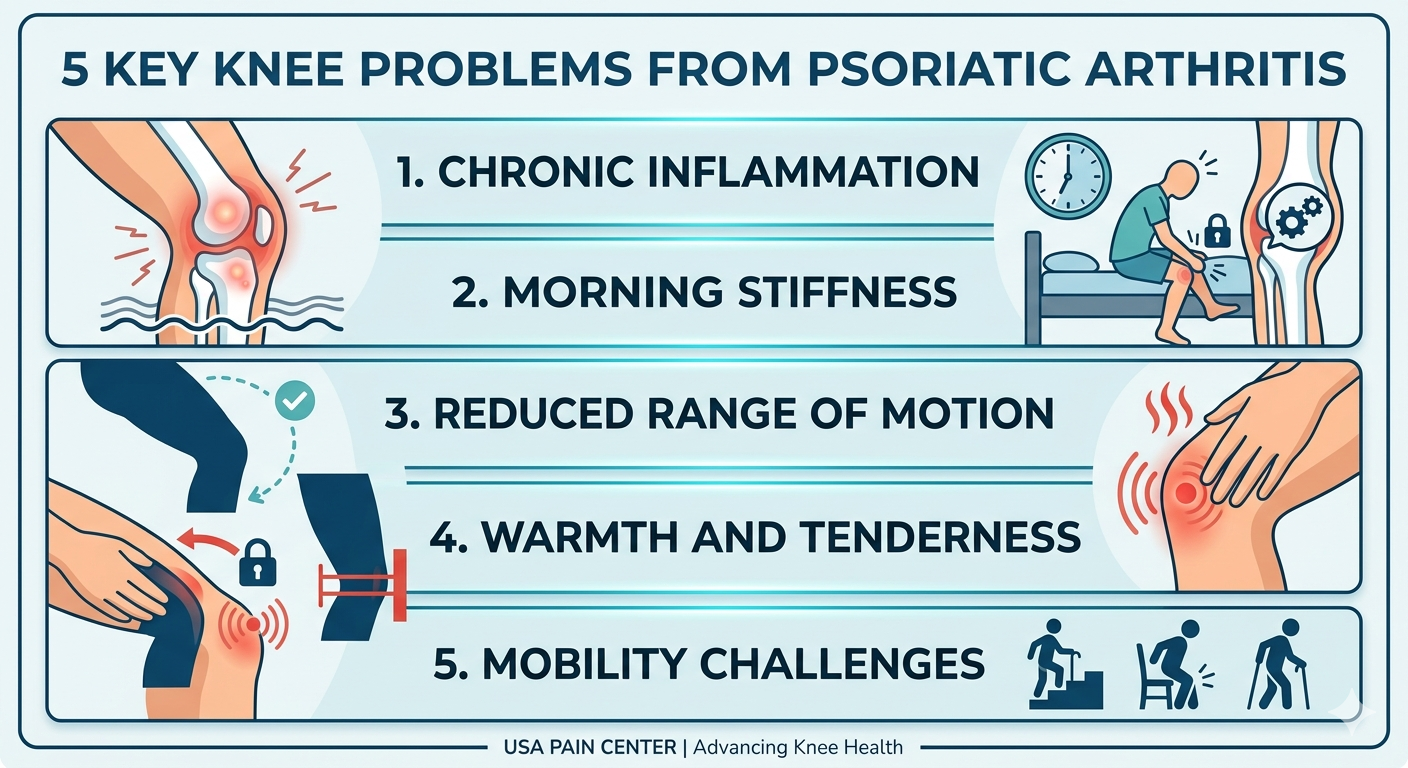
PsA pain is driven by an overactive immune response, so knees may feel warm, swollen, and tender even without recent activity. Knee osteoarthritis, by contrast, is associated with cartilage breakdown from repeated use and tends to worsen with activity and ease with rest.
Morning Stiffness Duration
Stiffness that lasts less than 30 minutes and loosens quickly with movement is more typical of osteoarthritis. Stiffness that lingers for an hour or more, especially first thing in the morning, may point toward an inflammatory condition like PsA.
Skin, Nail, and Whole-Body Signs
PsA is often accompanied by psoriasis skin patches, pitted or separated nails, and fatigue. Knee osteoarthritis generally does not involve skin or nail changes and tends to stay localized to the affected joint.
Can Psoriatic Arthritis Lead to Knee Osteoarthritis?
Yes, psoriatic arthritis can lead to knee osteoarthritis. Ongoing PsA inflammation can damage cartilage and joint structures over time, and joints affected by PsA are more likely to develop secondary osteoarthritis later on.1 This means it is possible to have both conditions in the same knee: PsA driving the original inflammation, and osteoarthritis developing as a result of the joint damage it left behind.
For patients in this situation, managing PsA disease activity with a rheumatologist remains essential, but the osteoarthritis-related pain that follows may respond to knee-specific, non-surgical options.
Managing Psoriatic Arthritis Knee Symptoms at Home
Diet and Inflammation
There is no single diet that reverses psoriatic arthritis, but a balanced, whole-food diet rich in fruits, vegetables, lean protein, and healthy fats may help support overall joint health. Some people find that reducing processed and sugary foods eases symptoms, though individual responses vary. For a closer look at how diet relates to osteoarthritis-related knee symptoms specifically, see foods that may make knee arthritis worse. Talk with your rheumatologist before making major dietary changes related to PsA.
Low-Impact Movement and Pilates
Low-impact activities such as swimming, walking, and Pilates can help maintain flexibility and support the muscles around the knee without adding excess stress to the joint. Many people with joint pain, whether from PsA or osteoarthritis, find these gentler forms of movement more comfortable than high-impact exercise.
Calming a Flare-Up
During a flare, rest, gentle stretching, and hot or cold therapy may offer some relief. Because PsA flares involve immune system activity, medication adjustments guided by a rheumatologist are often the most effective way to manage a flare, especially if it is frequent or severe.
When Knee Pain May Indicate Osteoarthritis
If your knee pain worsens with activity, improves with rest, and comes with a grinding or creaking sensation rather than warmth and swelling, osteoarthritis may be the primary driver. Reviewing your knee osteoarthritis symptoms and understanding common knee osteoarthritis causes can help you and your doctor sort out which condition, or combination of conditions, is behind your symptoms. Catching early signs of knee arthritis and unusual knee swelling patterns can also make evaluation easier.
Treatment Options for Psoriatic Arthritis and Osteoarthritis-Related Knee Pain
Conservative Approaches
Physical therapy, activity modification, and weight management are often the first steps for knee osteoarthritis and may help reduce strain on the joint.
Genicular Artery Embolization (GAE)
For patients with persistent osteoarthritis-related knee pain that has not responded well to conservative measures, genicular artery embolization (GAE) is a minimally invasive, image-guided option offered at USA Pain Center.2 GAE targets abnormal blood vessel growth associated with knee osteoarthritis inflammation and may help reduce pain in appropriate candidates. GAE is not a treatment for the underlying autoimmune activity of psoriatic arthritis; a specialist can help determine whether the osteoarthritis component of your knee pain makes you a good candidate.
Schedule A Consultation Online
Knee Pain Evaluation
Ready to Understand Your Knee Pain?
If your knee pain has features of both inflammation and wear, getting a clear diagnosis is the best place to start. USA Pain Center specialists focus on osteoarthritis-related knee pain and can help clarify whether a minimally invasive option is appropriate for you.
A rheumatologist remains the right resource for managing psoriatic arthritis disease activity, while USA Pain Center can help address the osteoarthritis-related knee symptoms that sometimes follow.
FAQs About Psoriatic Arthritis and Knee Pain
- Cleveland Clinic. “Psoriatic Arthritis vs. Osteoarthritis.” Cleveland Clinic Health Library.
- National Library of Medicine (PMC). “Genicular Artery Embolization for Treatment of Knee Osteoarthritis Pain: Systematic Review and Meta-Analysis.”
Medical disclaimer: USA Pain Center content provides medical education only. It is not a diagnosis or treatment recommendation. Consult a pain management specialist for evaluation.