
Knee osteoarthritis (OA) is one of the most common causes of knee pain among adults over 50. As knee OA progresses over time, the cartilage that “cushions” the knee joint wears away, leading to stiffness, inflammation, and pain. This degenerative condition often affects daily activities like walking, climbing stairs, or sleeping comfortably.
This disease progresses in four stages, and multiple treatment options are available to address each one. Understanding the stages of osteoarthritis in the knee is essential — not only for identifying where you are in the progression but also for choosing the right treatment path.
What Is Knee Osteoarthritis?
Osteoarthritis of the knee is a specific type of arthritis in which cartilage in the knee joint begins to deteriorate. The cartilage loss narrows the space between bones, causing the bones to rub against each other. Overgrowths at the edge of the knee bones, known as bone spurs, may also occur.
Common Symptoms of Knee Osteoarthritis
As the disease progresses, knee osteoarthritis will carry the following symptoms:
- Aching or throbbing pain
- Swelling or tenderness
- Joint stiffness or instability
- “Locking and popping” sensations
- Loss or flexibility or range of motion
Why Cartilage Degeneration in the Knee Causes Pain
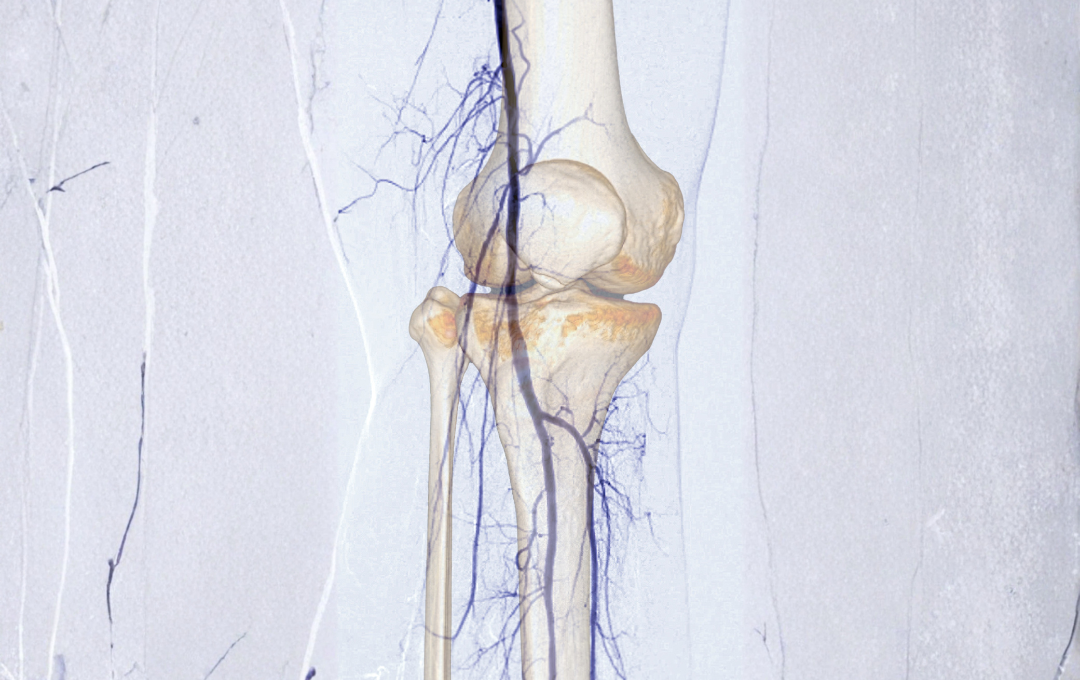
As cartilage wears down, the friction between bones triggers inflammation, the body’s repair response. Specific cells migrate into the joint to address what the body perceives as an injury; however, because knee osteoarthritis is a degenerative condition, the inflammation never fully resolves. Instead, inflammation becomes persistent as more cells flow into the joint.
The joint responds by forming new, abnormal blood vessels to support the ongoing influx of cells. This can be painful, and the cycle will continue until surgery is needed to replace the joint.
Who’s at Risk of Knee Osteoarthritis?
Several risk factors can influence the progression of the disease, such as:
- Older age
- Excess weight
- Family history of joint problems
- Gender (women are statistically more prone to it)
- History of knee injuries or surgeries
- Repetitive or high-impact knee activities
The Stages of Knee Osteoarthritis Explained
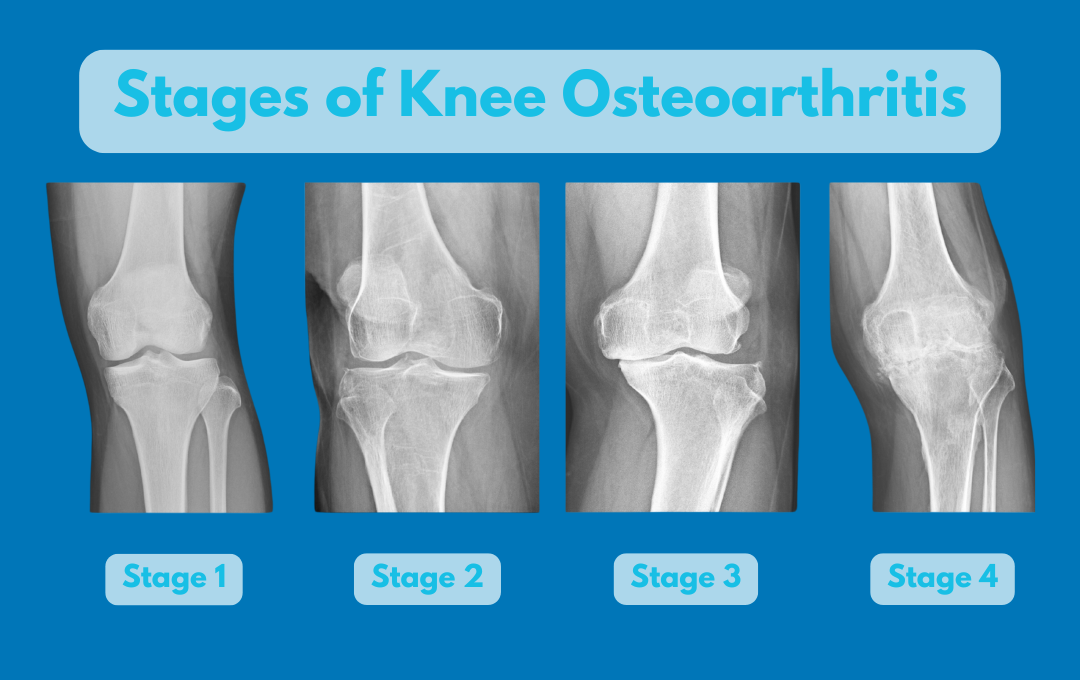
The Kellgren-Lawrence classification is typically used to describe the stages of knee osteoarthritis, ranging from 0 (normal) to 4 (severe). Here’s what each stage means:
Stage 0: Normal
Stage 0 knee osteoarthritis is actually classified as a healthy knee. The space between the joints is normal, and the cartilage is smooth.
Stage 1: Doubtful
This stage of knee osteoarthritis is the “doubtful” stage because the signs of the condition may not be clear. There may be some “wear and tear” and a small bone spur, but both are difficult to identify on an X-ray. Most patients don’t experience symptoms, and if they do, it’s usually very mild.
Stage 2: Mild
Stage 2 knee osteoarthritis is the “first real sign” of the disease. Cartilage breakdown is more noticeable on an X-ray, and more bone spurs may be present. Most patients will experience some minor knee pain and stiffness after a long walk.
Stage 3: Moderate
Stage 3 knee osteoarthritis is the “turning point” where the erosion of cartilage is significant, and the joint space further narrows. More bone spurs may form, and the friction will cause increased pain during physical activity. Prolonged periods of inactivity can cause stiffness that starts to impact mobility.
Stage 4: Severe
The final stage of knee osteoarthritis is the most serious stage. The cartilage that once held the knee together is nearly gone, causing painful bone-on-bone contact that makes it difficult to move. Understanding how serious bone-on-bone knee arthritis can be can help put these advanced joint changes and their symptoms into context. Many patients may also feel their knee “lock” in place, further worsening mobility.
How the Stages of Osteoarthritis Are Diagnosed

Diagnosing the stages of knee osteoarthritis typically involves X-rays, MRIs, or ultrasounds. These tools use electromagnetic, radio, or sound waves to take real-time images of the inside of the knee.
Depending on the type of imaging tool used, your doctor can see how much the cartilage deteriorated and whether bone spurs are present. Ultrasounds can also show abnormal blood vessels that form in the knee due to chronic inflammation.
A physical exam of the knee is done to check the joint’s flexibility and swelling. Tracking symptoms of knee osteoarthritis is also important—keeping a log of when symptoms flare up may help your doctor determine whether your symptoms indicate knee osteoarthritis.
If you’ve been living with chronic knee pain, scheduling a consultation with one of our specialists can help you understand your stage and explore treatment options suited to your lifestyle.
Treatment Options for Knee Osteoarthritis
Various treatment options address pain and swelling from osteoarthritis in the knee. The best treatment for you will depend on the extent of your condition.
| Treatment Options | Stage(s) |
| Lifestyle changes, physical therapy, weight management | 1 |
| Medications, steroid injections | 1, 2, 3 |
| Genicular artery embolization (GAE) | 2, 3, 4 |
| Knee replacement surgery | 4 |
For patients living with knee osteoarthritis, lifestyle changes may help manage earlier symptoms, while persistent or worsening pain may signal that it is time to consider additional treatment options.
As medical technology is advancing, minimally invasive procedures like genicular artery embolization (GAE) for knee pain are now transforming how moderate to severe knee osteoarthritis is treated—offering pain relief with shorter recovery times and no general anesthesia.
How Genicular Artery Embolization (GAE) Helps
GAE works to reduce blood flow in abnormal blood vessels that fuel painful symptoms in the knee joint. As a result, inflammation and chronic pain subside significantly.
The minimally invasive nature of GAE allows patients to return to an active lifestyle without major side effects or a prolonged recovery. Many patients start noticing mobility improvements shortly after treatment. One of our patients, a New York school bus driver, went from walking with crutches to dancing in the reception room after his procedure.
GAE has also shown promising results for people who want to delay their need for knee replacement surgery. In fact, GAE can be an alternative to surgery for patients who may not be qualified for knee replacement. Patients with advanced arthritis can also explore whether it is possible to avoid knee replacement with bone-on-bone knees based on their symptoms and treatment options.
Knee Arthritis Treatment at USA Pain Center
At USA Pain Center, we focus on helping our patients return to a more active lifestyle with less pain and more emphasis on their overall health and wellness.
USA Pain Center is a part of a multi-specialty network of physicians that treats many chronic conditions through minimally invasive, nonsurgical procedures like GAE. Our specialists avoid surgical incisions, which lowers the risk of complications and shortens the recovery period. This gives patients faster access to specialty care than they would receive through a hospital, and at a lower cost than hospital-based surgery.
Additionally, our osteoarthritis knee specialists, many of whom are board-certified, are experienced in providing the gold standard of minimally invasive care. Our clinical excellence has received formal recognition from the Accreditation Association for Ambulatory Health Care (AAAHC), a rigorous certification organization that ensures patients receive high-quality, safe, and effective treatment.
Knee osteoarthritis is a progressive condition, but understanding its stages empowers you to take control early. Whether you’re experiencing early signs or advanced symptoms of knee osteoarthritis, knee pain treatments like GAE can help restore mobility and reduce symptoms without the need for surgery.
If you’re looking for a non-surgical solution to manage your knee pain, USA Pain Center provides the expertise and compassion needed to help you take the next step toward relief.
If you’re ready to explore modern, patient-centered knee pain solutions, reach out to USA Pain Center and take your first step toward better joint health today.
FAQs About the Stages of Knee Osteoarthritis
Can arthritis in the knee go away?
Knee arthritis doesn’t go away because it’s a progressive, degenerative condition. However, medical treatments can help slow the advancement of the disease, allowing patients to live with less pain, swelling, stiffness, and limited mobility.
How bad does a knee have to be before replacement?
Patients with advanced stage 4 knee osteoarthritis may need knee replacement surgery when the joint cartilage is nearly gone. This stage causes the bones to grind against each other, making it difficult to move around. However, addressing knee arthritis earlier can help prolong the need for knee replacement.
How can I stop my knee arthritis from progressing?
While you can’t stop the progression of knee arthritis, you can slow it down through medical treatments, such as cortisone shots or genicular artery embolization (GAE). If you experience knee pain, swelling, and stiffness, visit a knee pain specialist to discuss symptoms and treatment options.