
When physical therapy, cortisone injections, and other conservative treatments no longer provide adequate relief, knee replacement surgery is not the only option left.
Genicular artery embolization (GAE) and radiofrequency ablation (RFA) are two minimally invasive procedures that can reduce chronic knee pain and, in many cases, delay or eliminate the need for knee replacement surgery. Both are performed on an outpatient basis, but they work differently and are suited for different patients.
Understanding the pros and cons of both procedures can help patients make a more informed decision about their next steps toward less pain and better mobility.
Why Knee Osteoarthritis Causes Pain
When you have knee osteoarthritis, the protective cartilage that acts as a shock absorber slowly wears away. As this “cushion” disappears, the bones begin to rub together, causing bone-on-bone friction, swelling, and pain. Over time, this constant irritation causes the lining of your knee joint (the synovium) to become permanently inflamed.
This long-term inflammation triggers a process called neovascularization—the growth of new, abnormal blood vessels. The extra blood vessels may also be accompanied by the development of more hypersensitive nerve endings. The National Institutes of Health reports that this “hypervascularity” is a major reason why the knee remains painful and throbbing even when you aren’t moving.1
Because these abnormal vessels and nerves are physically woven into the joint lining, common treatments like physical therapy or cortisone shots often stop working. They might mask the symptoms for a while, but they don’t address the underlying network of extra vessels and nerves that are fueling the chronic pain.
How Genicular Artery Embolization Works
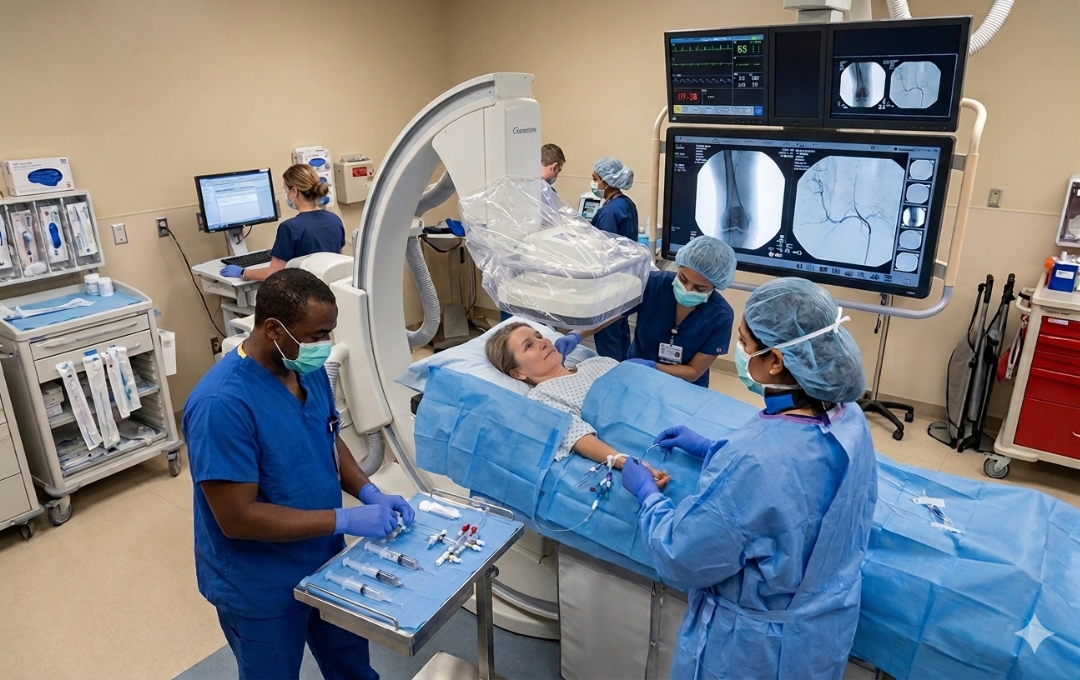
Genicular artery embolization (GAE) is a minimally invasive procedure that targets the inflammation contributing to knee pain. Unlike knee replacement surgery or RFA, GAE works by reducing the blood supply to the chronically inflamed lining of your knee.
During the genicular artery embolization procedure, the physician inserts a thin catheter through the wrist or groin. Using advanced imaging technology, the catheter is guided to the genicular arteries, the vessels that supply blood to the knee joint.
Tiny particles called embolization agents are then injected into the abnormal blood vessels within the synovial tissue. These microspheres will block blood flow in those vessels, reducing local inflammation and alleviating pain.
GAE does not involve incisions, general anesthesia, or an overnight hospital stay. Most patients resume normal daily activities within a few days.
Patients who may be candidates for GAE typically:
- Have been diagnosed with mild-to-moderate knee osteoarthritis with retained cartilage
- Have not found sufficient relief from physical therapy, oral medications, or injections
- Prefer to delay or are not yet appropriate candidates for knee replacement surgery
Clinical studies, including one from the journal CardioVascular and Interventional Radiology,2 have shown that many GAE patients report significant pain reduction and improved function for up to two years or longer. The duration of pain relief after GAE can vary based on factors such as the severity of osteoarthritis and the individual patient.
What Is Radiofrequency Ablation for Knee Pain?
Radiofrequency ablation (RFA) for knee pain uses heat generated by an electrical current to disrupt genicular nerves. By interrupting the nerve’s pain signals to the brain, RFA reduces how much pain is felt.
While RFA has shown to effectively reduce pain, it does not address the inflammation and neovascularization. RFA is best suited for patients whose pain is primarily nerve-related, which is confirmed with a different exam called a diagnostic nerve block.
Pain relief from RFA also does not last as long as GAE. Studies report a typical duration of six months to two years before symptoms return.
GAE vs. RFA: Side-by-Side Comparison
| Genicular Artery Embolization (GAE) | Radiofrequency Ablation (RFA) | |
| Mechanism | Reduces abnormal blood flow to inflamed tissue | Disrupts genicular nerve pain signals |
| Addresses inflammation | Yes | No |
| Typical duration of relief | 2+ years in many patients; individual outcomes vary | 6 months to 2 years |
| Repeat procedure | Less frequently needed | Often needed as nerves regenerate |
| Recovery | Most patients resume normal activity within days | Most patients resume normal activity within days |
The most significant distinction in a genicular artery embolization vs. ablation comparison is what each procedure targets. RFA addresses pain signaling without modifying the underlying inflammatory process. GAE reduces abnormal blood vessel growth in the synovial tissue, acting on a primary contributor to the inflammation itself. This difference is a key factor physicians weigh when recommending one procedure over the other.
Which Knee Pain Procedure Is Right for You?
The right procedure, whether it’s genicular artery embolization or radiofrequency ablation, depends on several factors. This includes the severity of your arthritis, the source of your pain, and your treatment history.
At USA Pain Center, our interventional radiologists use ultrasound imaging to assess abnormal blood flow to the knee. This helps confirm whether synovial inflammation and neovascularization are driving your pain — and whether GAE is the appropriate course of treatment.
Get an Expert Opinion at USA Pain Center

With expert guidance, you can make a more informed decision on whether genicular artery embolization (GAE) or radiofrequency ablation (RFA) will best alleviate your knee pain. The physicians at USA Pain Center specialize in genicular artery embolization (GAE) and conduct comprehensive evaluations before recommending any course of treatment. Our specialists’ goal during the consultation is to identify the source of your knee pain and determine whether GAE is the appropriate intervention for your condition.
At USA Pain Center, our physicians are experts in interventional radiology. This advanced field uses real-time ultrasound and X-ray guidance to perform complex treatments without major surgery. By choosing a team specialized in image-guided procedures, you receive precise, minimally invasive care for a wide range of conditions, all performed in an outpatient setting that prioritizes your time and recovery.
USA Pain Center accepts various health insurance plans. Since insurance requirements can vary, our team offers instant insurance verification during the scheduling process to determine if patients need a referral before their visit.
If you have arthritic knee pain and are curious which treatment is right for you, schedule a consultation with a knee pain specialist for more information.