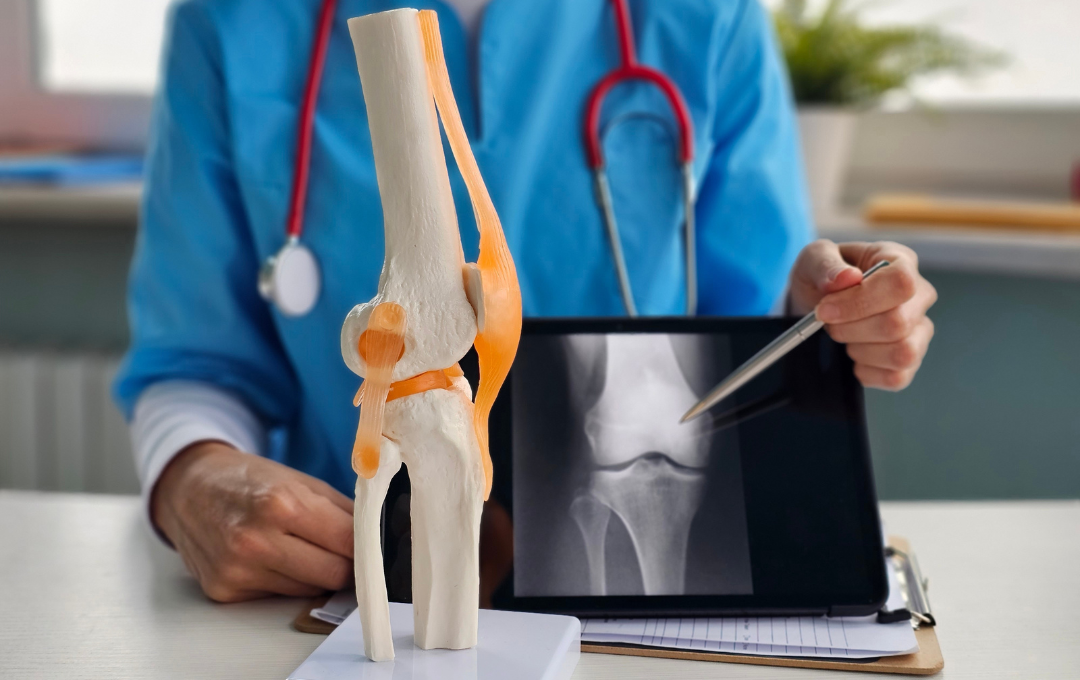
You underwent surgery to get your active life back. Yet, despite the procedure, a persistent ache makes simple tasks like walking the dog feel impossible. It offers little comfort when a surgeon praises your “perfectly placed” metal parts on an X-ray while your joint still throbs and swells.
Clinical studies show that successful structural repairs don’t always guarantee a pain-free knee, especially when osteoarthritis was the reason. The hidden culprit is often neovascularization—a process where the body grows a network of “rogue” blood vessels that feed chronic inflammation. Think of this excessive blood flow like a pain volume knob stuck on “high,” broadcasting distress signals even though the bone has healed.
When the Hardware is Perfect, but the Pain Persists
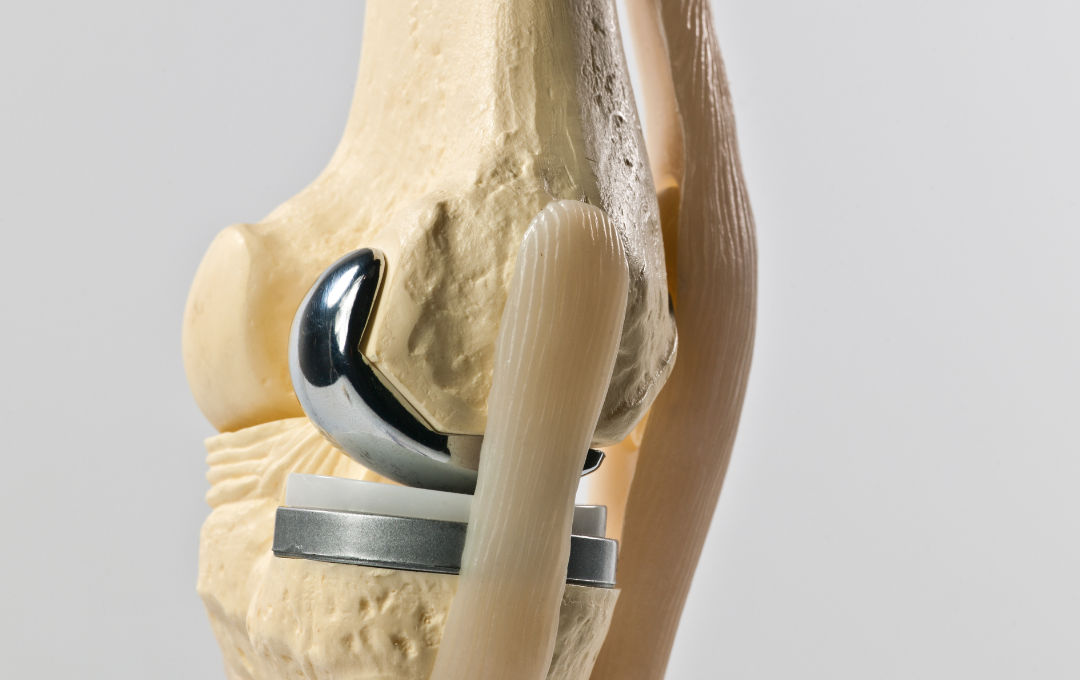
If your surgeon confirms your hardware looks great, but your knee still feels “wrong,” you are likely dealing with a soft tissue problem rather than a mechanical one. This is often the result of chronic synovitis, or inflammation of the joint lining. You might notice radiating warmth, persistent swelling that limits your range of motion, or a deep, dull ache that disrupts your sleep.
To feed this inflammation, the body builds extra, abnormal arteries. These “rogue” vessels act like leaky pipes, pumping excess fluid into the joint. Because new, hypersensitive nerve endings grow alongside these vessels, every pulse of blood can trigger a pain signal.
Navigating the Vascular Highway
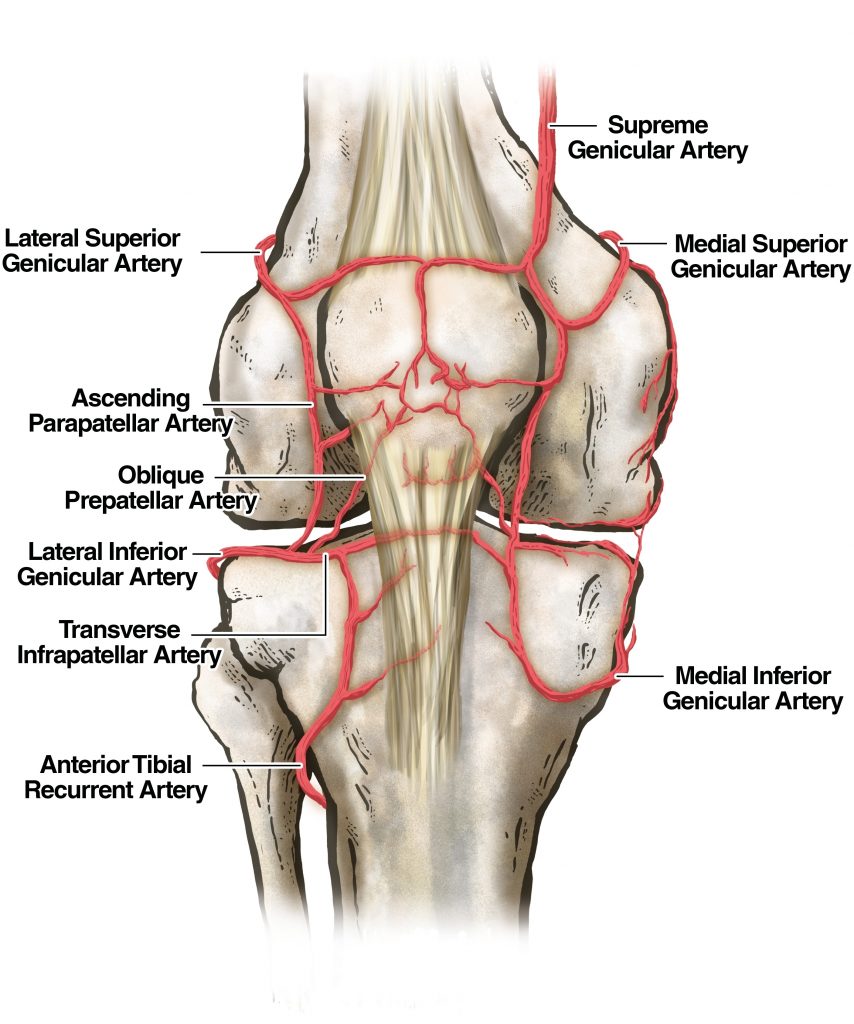
One common worry for patients is whether the metal parts from their knee surgery will get in the way of new treatments. The good news is that they do not. Because Genicular Artery Embolization (GAE) works through your blood vessels, it can reach the painful areas without touching your metal hardware at all.
Think of your knee implant as being attached to the bone, while your blood vessels are like tunnels that run alongside and underneath it. To perform the treatment, a specialist uses a very thin, flexible tube to travel through these “tunnels.” Since the doctor stays entirely inside the blood vessels, your previous surgery site is never disturbed. Even though there is metal in your knee, doctors use a special dye and live X-ray video to see right past it. The inflamed arteries light up clearly on the screen, while the metal implant just stays in the background.
How GAE Works
To understand Genicular Artery Embolization (GAE), it helps to look at exactly what happens during the procedure and why it relieves pain.
The Procedure Step-by-Step
Unlike surgery, GAE does not involve cutting into the knee joint. It is performed by an interventional radiologist who focuses on your blood vessels.
- Sedation: You are given “twilight sedation.” This means you are not “knocked out” with general anesthesia, but you are very relaxed and will not feel pain during the process.
- Access: The doctor makes a tiny opening (about the size of a pinhead) in the skin of your upper leg. They insert a very thin, flexible tube called a catheter into an artery.
- Guidance: Using a live X-ray monitor, the doctor moves the catheter through your arteries until it reaches the area around your knee.
- Identification: The doctor looks for areas where there is too much blood flow. In a painful knee, extra blood vessels have grown to feed chronic inflammation. This inflammation is what causes your pain and stiffness.
- The Fix: Once these extra vessels are found, the doctor releases tiny particles through the catheter. These particles stay in those specific vessels to permanentely reduce the blood flow to the inflamed area.
- Closing: The catheter is removed. Because the opening is so small, you do not need stitches; a simple Band-Aid is placed over the site.
An Easier Path to Recovery
After a GAE procedure, the recovery experience is focused on the gradual calming of internal inflammation rather than the intense physical healing required by surgery.
In the first 48 hours, you might feel some temporary tightness or a sensation of warmth around the knee as the blood flow to the inflamed tissue begins to adjust. Unlike the recovery from your partial knee replacement, there are no large incisions to care for and no surgical pain to manage; you will likely only have a small Band-Aid on your upper leg.
Within the first week, most people notice a significant reduction in the deep, throbbing ache and persistent swelling that had previously made movement difficult.
By the second week, you can typically expect your knee to feel lighter and more flexible, making it much easier to engage in physical therapy or enjoy a daily walk without the constant “volume” of chronic pain.
GAE at USA Pain Center
Managing lingering pain after surgery isn’t just about the hardware—it’s about the soft tissue. If you’re ready to quiet the inflammation and regain your mobility, a consultation with an interventional radiologist can determine if your persistent ache is being fueled by rogue blood vessels. At USA Pain Center, we are here to help you finish your recovery journey and find the lasting relief you deserve.