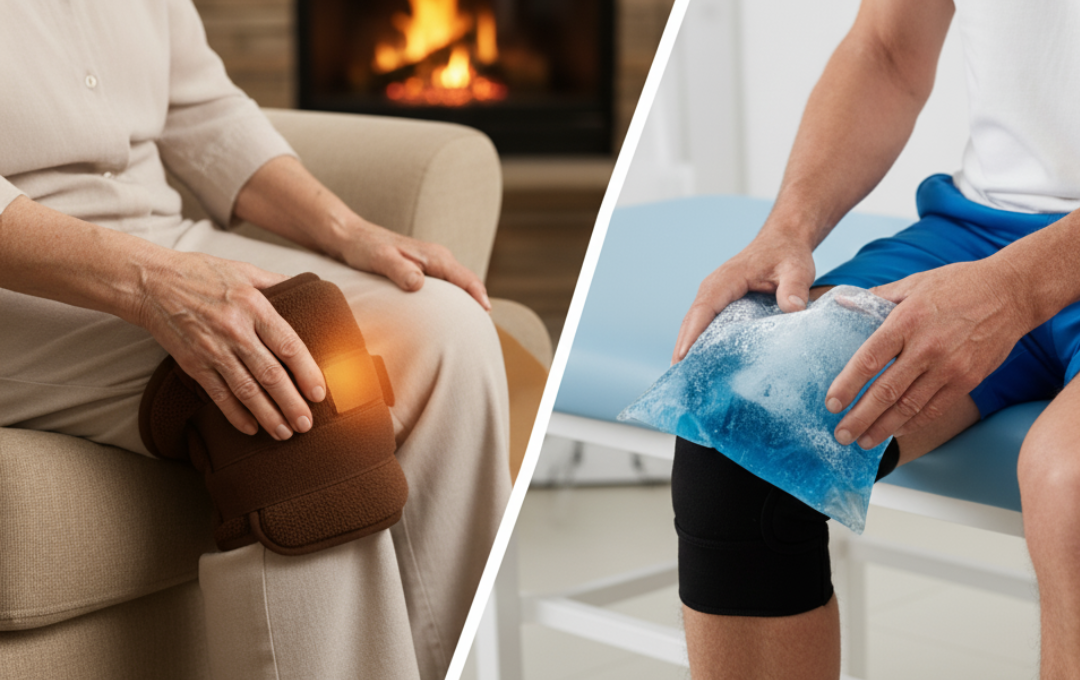
Knee arthritis is a prevalent condition that affects millions, often bringing with it a trilogy of frustrating symptoms: stiffness, persistent pain, and noticeable swelling. However, managing these daily discomforts doesn’t always require a trip to the doctor or a prescription unless symptoms persist.
While exploring advanced treatments, many people find significant relief right at home using two of the simplest, non-invasive therapies: heat and cold. The key to unlocking maximum relief is knowing when to use each one.
Is Heat Good for Arthritis in the Knees?
When your knee feels tight, achy, and slow to move, heat is often the answer.
What it does: Heat works by increasing blood flow and circulation to the affected area. This increased flow helps relax tense muscles, making the joint more pliable and less stiff.
When to use it: Heat is ideal for chronic pain and stiffness. It’s your go-to therapy for:
- Morning joint stiffness, or when your joint is generally “cold” and achy.
- Before exercising, warm up the joint to improve the range of motion.
Heat for Arthritis in the Knee:
- Heating pads or hot water bottles
- Hot showers or baths
- Whirlpools
- Warm, moist towels
While heat therapy is excellent for relaxing tight muscles and improving stiffness by increasing circulation, there are times when your knee needs the opposite approach. When your pain shifts from a dull, chronic ache to an intense, throbbing sensation, especially if accompanied by visible swelling, redness, or warmth to the touch, it signals an active inflammatory flare-up. This could be a cue to switch gears and introduce cold therapy, which specifically targets and reduces that acute inflammation.
The Benefits of Cold Therapy
When your knee is throbbing, swollen, and feels hot to the touch, it’s time to reach for the ice.
What it does: Cold therapy reduces blood flow to the area, which is crucial for decreasing inflammation and swelling. Additionally, the cold sensation numbs the nerve endings, providing temporary and immediate pain relief.
When to use it: Cold is best for acute pain and flare-ups, especially when the joint is:
- Swollen, red, or warm to the touch.
- Recently aggravated after activity or exercise.
Examples of cold therapy:
- Ice packs or commercial gel packs
- Bags of frozen vegetables
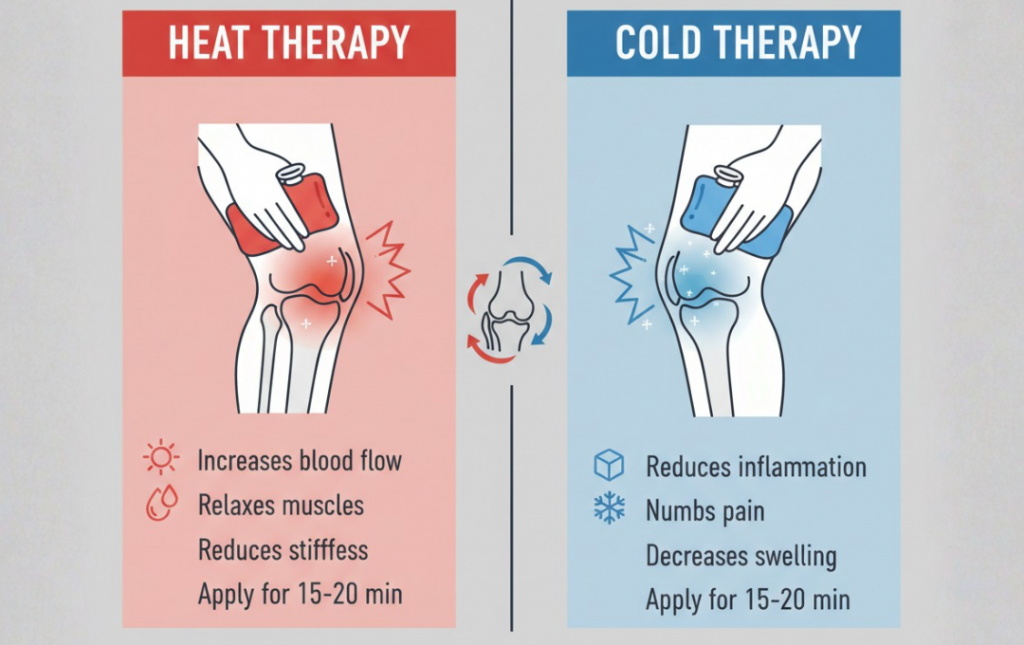
While heat and cold offer distinct ways to manage knee arthritis pain, they are not mutually exclusive; understanding the fundamental difference between their mechanisms—heat for stiffness and cold for swelling—allows you to effectively alternate or switch between them as the needs of your knee change throughout the day or during a flare-up. Using heat therapy addresses the dull, chronic ache and stiffness by increasing circulation, while pivoting to cold therapy is the best strategy when you need to immediately calm acute throbbing, inflammation, and swelling. By recognizing these different signals from your joint, you can select the right treatment at the right time for optimal relief and mobility.
Is Heat or Ice Better for Arthritis Knee Pain?
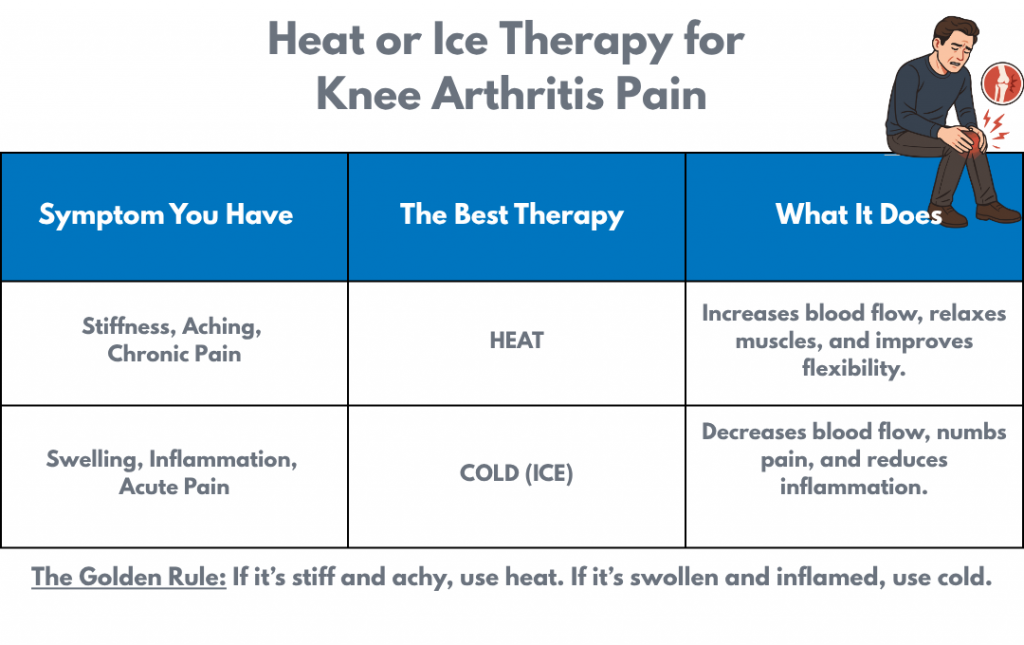
The question of “Is heat good for arthritis in the knees?” and “Is heat or ice better for arthritis knee pain?” really comes down to what your knee is telling you right now.
Caption: Ice or heat for knee arthritis pain. The choice between heat and ice depends entirely on what your knee is telling you at this moment.
Some people find the most relief by alternating between hot and cold treatments. If you choose this path, be sure to leave a few hours between applications to allow the joint temperature to return to normal.
Important Safety Measures
While heat and cold are safe and straightforward, a few precautions are necessary to protect your skin and health.
Heat Therapy:
- Avoid using heat on new injuries, open wounds, or during a flare-up where the joint is already swollen and hot.
- Never fall asleep with a heating pad on, as this can lead to serious burns.
- Keep treatment times limited to about 15-20 minutes.
Cold Therapy:
- Never apply ice directly to the skin to avoid tissue damage or frostbite. Always wrap ice packs in a thin towel.
- Avoid cold if you have circulation problems (like Raynaud’s phenomenon) or conditions that affect temperature sensation, such as diabetic neuropathy.
- Keep treatment times limited to about 15-20 minutes.
When To Talk To A Specialist About Treating Knee Arthritis

If you are experiencing concerning symptoms that significantly impact your daily life, it could mean your knee arthritis may be progressing and requires specialized management. It is important to seek professional help if you notice a rapid increase in knee pain, a significant loss of joint mobility or function (making walking or bending difficult), or persistent stiffness that doesn’t improve with rest or over-the-counter treatments.
These symptoms are signs that the cartilage is wearing down and the joint is sustaining more damage. In this case, a knee specialist can accurately diagnose the severity of your condition and create a personalized treatment plan to slow the disease’s progression, protect your joint tissue, and maintain your function.
CTA: Learn About GAE
Minimally Invasive Relief and Joint Preservation
The knee specialists at USA Pain Center are equipped to advise you on a minimally invasive strategy for managing knee arthritis and maintaining joint health. Traditional management often involves medications and physical therapy, but when these are insufficient, minimally invasive procedures like genicular artery embolization (GAE) can offer effective relief without the risks and extensive recovery time associated with major surgery like total knee replacement.
Minimally invasive treatment like genicular artery embolization (GAE) can target and disrupt the pain signals from the knee joint. By providing targeted pain relief and potentially slowing the inflammatory process, it can enhance mobility, improve quality of life, and delay or potentially avoid the need for more invasive surgical interventions. If you are seeking durable and effective knee arthritis relief, contact the knee specialists at USA Pain Center today to explore an alternative, joint-sparing option.
USA Pain Centers is dedicated to providing patient-centered care across our numerous locations in Connecticut, New Jersey, New York, Texas, and Washington, D.C. Our commitment to high standards is demonstrated by our Accreditation by the Accreditation Association for Ambulatory Health Care (AAAHC), ensuring you receive top-quality, reliable treatment.
We accept most major insurance plans, along with offering a variety of flexible payment options to ensure that financial concerns don’t stand in the way of your health.
If you are weary of the persistent pain of knee arthritis, now is the time to seek a solution. Schedule a consultation with us today. Learn how our specialists can design a personalized plan to help you find the knee arthritis pain relief you deserve.
CTA: FIND A LOCATION NEAR YOU