
You’ve followed the standard advice to relieve knee pain: rest, ice, and over-the-counter anti-inflammatories. Perhaps you’ve even had an X-ray that returned “normal” results. Yet, the persistent ache remains. When traditional imaging fails to show a fracture or ligament tear, the source of your discomfort is often categorized as an “invisible” trigger—a mechanical or vascular issue that requires a more sophisticated diagnostic approach.
At USA Pain Center, we look beyond the surface of the joint. Understanding the underlying causes is the first step toward exploring advanced, non-surgical solutions. For many, this “invisible” culprit is chronic inflammation fueled by excess blood flow—a condition that can often be addressed through modern, minimally invasive treatment designed to reclaim your mobility without the need for traditional surgery.
Your Knee: The “Middle Man” Overworked Hinge
The knee is a relatively simple hinge joint designed primarily for flexion and extension. However, it is functionally positioned between two of the body’s most complex structures: the hip and the ankle. In clinical terms, the knee is often the victim of Kinetic Chain Dysfunction. This occurs when impaired muscles, joints, or nervous system components in one body part cause pain or inefficiency in another, often due to imbalances, poor posture, or injury.
If the hip lacks stability or the ankle lacks mobility, the knee is forced to compensate for the lost range of motion. Over thousands of repetitions—walking, climbing stairs, or exercising—this compensation leads to:
- Joint Inflammation: Persistent swelling within the synovial fluid.
- Patellofemoral Pain Syndrome: Irritation where the kneecap rests against the thigh bone.
- Accelerated Wear: Early-onset knee osteoarthritis caused by improper tracking.
Understanding Knee Arthritis and Chronic Pain
While mechanical issues like the “Foot-Knee Connection” are common, persistent pain is often a symptom of underlying joint degradation. Knee arthritis is not a single condition but a group of disorders that cause the “invisible” inflammation many patients feel.
Types of Arthritis Affecting the Knee
- Osteoarthritis (OA): The most common form, often called “wear and tear.” It occurs when the protective cartilage on the ends of your bones wears down over time.
- Post-Traumatic Arthritis: This develops after a knee injury (like a meniscus tear or ACL injury), even if the injury happened years ago.
- Rheumatoid Arthritis (RA): An inflammatory condition where the body’s immune system attacks the joint lining.
Symptoms and Diagnosis: Decoding the Pain
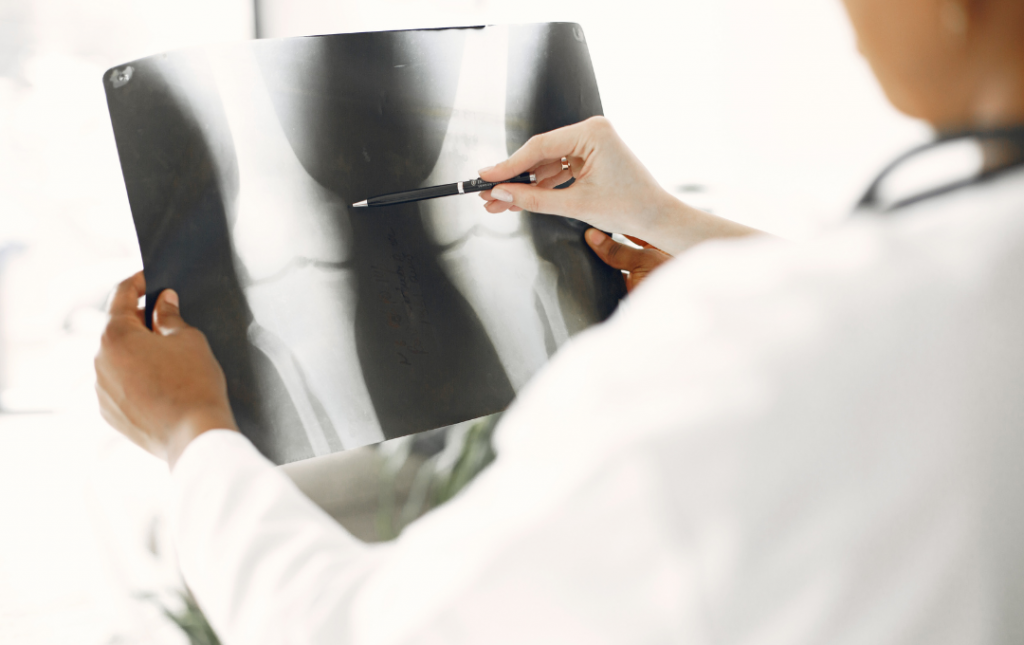
Effective treatment begins with an accurate diagnosis that differentiates between various types of discomfort. Because standard X-rays primarily capture bone structure, a specialized clinical evaluation is often required to identify the “invisible” biological and mechanical triggers that imaging might overlook.
How Knee Arthritis is Diagnosed
Recognizing the Indicators of Chronic Inflammation
Identifying the specific nature of your discomfort can provide essential clues regarding the underlying cause:
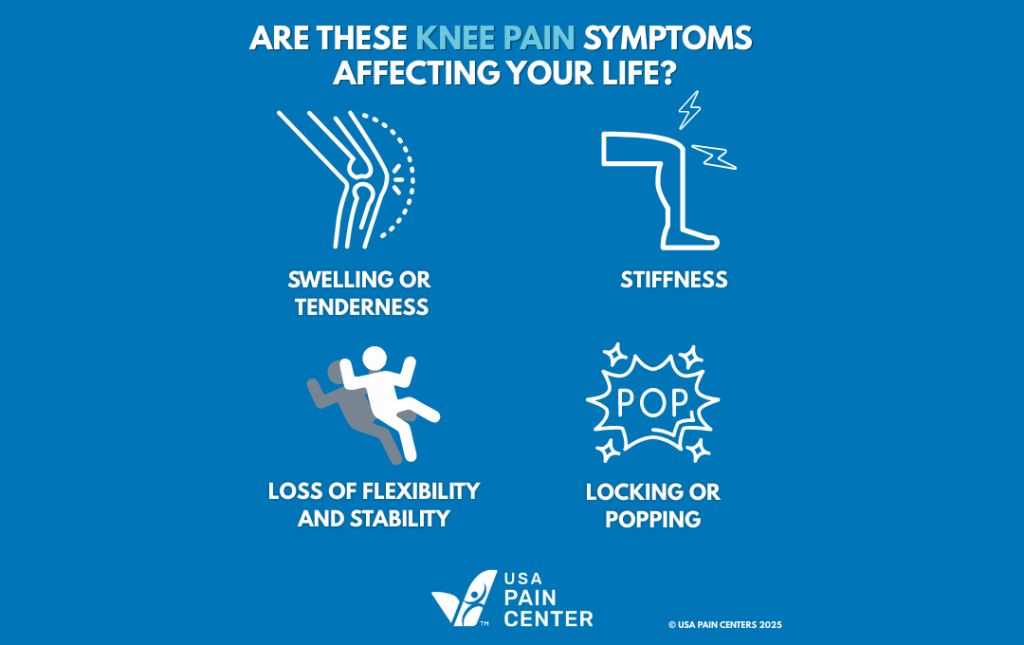
- Morning Stiffness: Persistent difficulty straightening or bending the knee, particularly upon waking or after long periods of inactivity.
- Nocturnal Throbbing (Night Pain): A deep, aching sensation that intensifies during rest and interferes with sleep. Clinically, this is frequently an indicator of vascular inflammation within the joint lining.
- Instability or “Giving Way”: A sensation that the knee may buckle under weight, often caused by the joint’s inflammatory response affecting muscle control and ligament stability.
Identifying the Invisible Reasons
When pain persists despite a “clean” X-ray, we must investigate secondary and supporting causes that do not always appear on imaging.
Hip and Gluteal Insufficiency
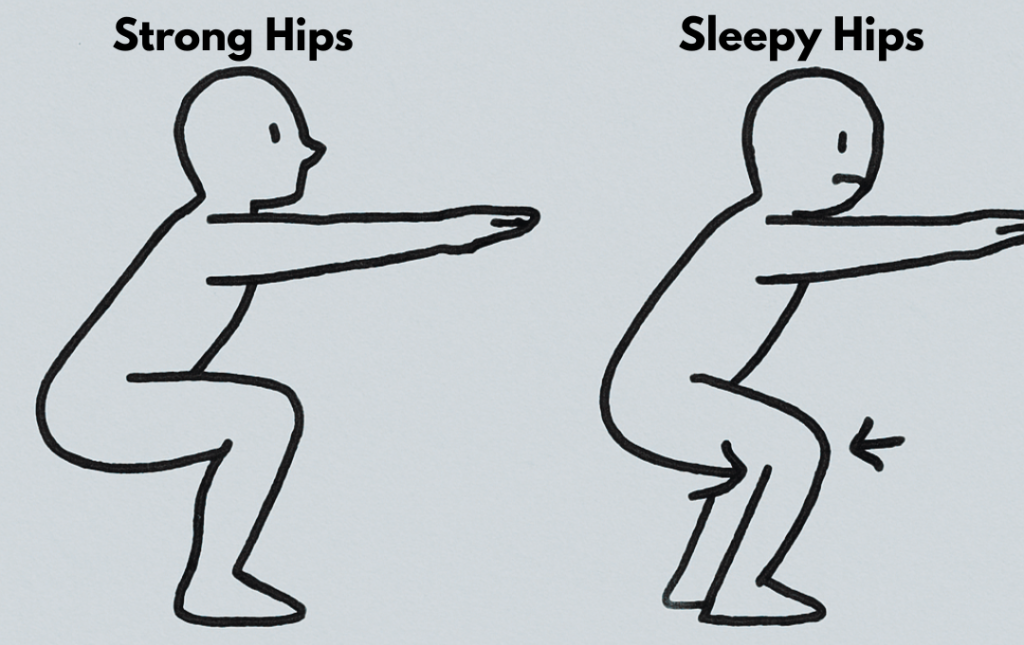
Modern sedentary lifestyles often lead to a condition where the muscles responsible for stabilizing the pelvis become underactive. Gluteal amnesia is a condition where the buttock muscles (specifically the gluteus medius) weaken and stop functioning properly due to prolonged sitting or inactivity.
Without this support, the femur (thigh bone) tends to rotate inward during movement. This “inward dive” places a grinding, lateral stress on the knee joint, leading to chronic irritation and patellar tendinopathy–a degenerative condition of the tendon connecting the kneecap to the shin, commonly causing pain below the knee due to repetitive overloading.
The Foot-Knee Connection
Your feet serve as the body’s primary shock absorbers. When the foot and ankle function correctly, they dampen the force of impact before it reaches the knee. However, if the arch collapses excessively—a condition known as over-pronation—it triggers a mechanical chain reaction. This collapse forces the shin bone to rotate inward, pulling the knee out of its natural alignment and creating chronic friction within the joint.
Outer Leg Tension: How the IT Band Affects the Knee
The IT band is a thick band of fascia running from the hip to the outer knee. When this tissue becomes excessively tight—often as a secondary response to hip weakness—it creates a “lateral pull” on the kneecap. This results in Iliotibial Band Syndrome, characterized by sharp pain on the outer side of the knee as the band rubs against the femur.
Lumbar Referred Pain (The Pinched Nerve)
In some cases, the knee is a “victim” of neurological issues originating in the spine. Known as referred pain, an irritated or compressed nerve in the lower back can send signals down the leg that the brain interprets as knee pain. In these instances, the knee joint itself is perfectly healthy, but the “wiring” from the spine is sending faulty signals.
The Blood Flow Connection
For many, the most elusive culprit is vascular. Conditions like knee osteoarthritis are often fueled by an overgrowth of tiny, abnormal blood vessels in the joint lining. These vessels carry inflammatory proteins that degrade cartilage and heighten pain sensitivity. Because this occurs within the joint tissue, it often won’t appear on a standard X-ray, making a specialized vascular evaluation essential.
Targeted Treatment Options for Lasting Relief
Effective management of chronic knee pain rarely relies on a single intervention. Instead, a progressive treatment path is utilized to address both the mechanical imbalances and the biological drivers of discomfort.
Phase One: Support and Strengthening

For many patients, the first line of defense involves correcting the “The Hip-Knee Connection” and “The Foot-Knee Connection.”
- Physical Therapy: Specialized protocols focused on neuromuscular activation of the gluteal muscles to prevent the “inward dive” of the knee.
- Orthotic Intervention: Utilizing corrective footwear or inserts to manage over-pronation and stabilize the foundation of the kinetic chain.
- Lifestyle Modification: Strategic weight management to reduce the cumulative load on the joint and anti-inflammatory nutrition to support tissue health.
Phase Two: Treating the Source with GAE
When conservative measures and over-the-counter medications fail to provide adequate relief, it often indicates that the pain is being driven by chronic vascular inflammation rather than just mechanical wear.
For patients with moderate-to-severe knee osteoarthritis, Genicular Artery Embolization (GAE) offers a major medical breakthrough. This minimally invasive, non-surgical procedure targets the “The Blood Flow Connection” by:
- Reducing the overgrowth of abnormal blood vessels in the joint lining (synovium).
- Decreasing the delivery of inflammatory proteins that attack cartilage.
- Significantly lowering pain sensitivity and improving daily function.
Your 3-Step Action Plan for Relief
Use this checklist to prepare for your consultation and help your specialist “decode” your pain more efficiently:
- Step 1: Audit Your Symptoms. Take note of when your pain is most intense. Is it “Night Pain” that feels like a deep throb, or is it a sharp “Weight-Bearing” pain when you use the stairs?
- Step 2: Perform the “Mirror Test.” Observe your movement in a mirror during a slow squat. Do your knees “dive” inward? This provides crucial data about your hip and gluteal stability.
- Step 3: Schedule a Vascular Evaluation. If you have been diagnosed with osteoarthritis but haven’t found relief through conservative care, ask about a vascular screening to check for chronic joint inflammation.
The USA Pain Center Approach: Innovation in Motion
At USA Pain Center, we specialize in Genicular Artery Embolization (GAE), a revolutionary, minimally invasive procedure designed to alleviate chronic knee pain, particularly the persistent discomfort associated with knee arthritis. This innovative technique is performed by our Interventional Radiologists (IR)—specialists who use advanced imaging to treat pain at its source with microscopic precision.
How GAE Works:
- Outpatient Convenience: Performed in-office with mild sedation; you return home the same day.
- Precision Targeting: A specialist guides a tiny catheter to the genicular arteries to identify areas of excess blood flow.
- Inflammation Control: Microscopic particles are used to selectively reduce blood flow to the knee lining, effectively “shutting down” the joint inflammation that drives knee osteoarthritis symptoms.
This procedure typically provides significant relief for six months to two years and can be repeated if necessary. By addressing the biological root of your discomfort, GAE helps slow symptom progression and restores mobility without the need for invasive surgery.
Contact our clinic today to evaluate your candidacy for GAE and find a solution for lasting relief.